TRAVELAvignon Has a Side Most People Never See8 min read
The Garden at the Top of the City
Rocher des Doms is a rocky outcrop at the center of Avignon that rises above the surrounding streets and provides a natural platform for the Jardin des Doms, a public garden with flowers, shade trees, and manicured lawns. The garden has been here in various forms since the medieval period, and it now functions as one of the best free viewpoints in the city. From the garden’s edges, you can see the Rhône River, the Pont Saint-Bénézet, the surrounding countryside, and the Avignon Cathedral, which stands at the summit of the same rock. The combination of the garden’s managed calm and the panoramic views makes it a logical place to orient yourself early in a visit before exploring the streets below. It is also one of the quieter spaces in a city center that can fill quickly with visitors during peak season.
When the City Becomes a Theater
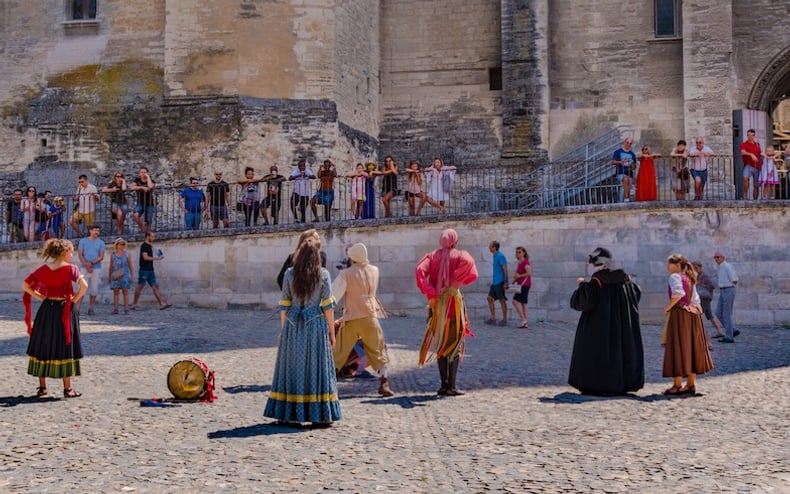
The Festival d’Avignon, founded in 1947, is one of the world’s largest performing arts festivals and runs for three weeks each July. During that period, the city operates as a large-scale open venue, with theaters, outdoor stages, church courtyards, and streets all serving as performance spaces. The program covers theater, dance, physical performance, and experimental work from companies across France and internationally. Beyond the ticketed productions, street performances, impromptu shows, and public discussions fill the hours between official events. The Palais des Papes courtyard serves as the main stage for major productions. For visitors who happen to be in Provence in July, the festival changes the character of the city entirely — the combination of historic architecture and live performance, sometimes running until well past midnight, produces an experience that does not resemble a typical tourist visit.