HISTORYThe Hidden Rooms That Famous Landmarks Have Kept From the Public4 min read
Michelangelo Drew All Over the Walls
In 1527, Michelangelo made a dangerous political bet. He supported a revolt against the Medici family, his longtime patrons. The revolt failed. The Medicis retook Florence in 1530, and the artist who had painted the Sistine Chapel ceiling suddenly needed to disappear.
He hid beneath the Medici Chapel in the Basilica of San Lorenzo, in a chamber measuring just 33 feet long, 10 feet wide, and 8 feet high. He stayed for at least two months. Michelangelo didn’t pace those walls in despair. He drew on them.
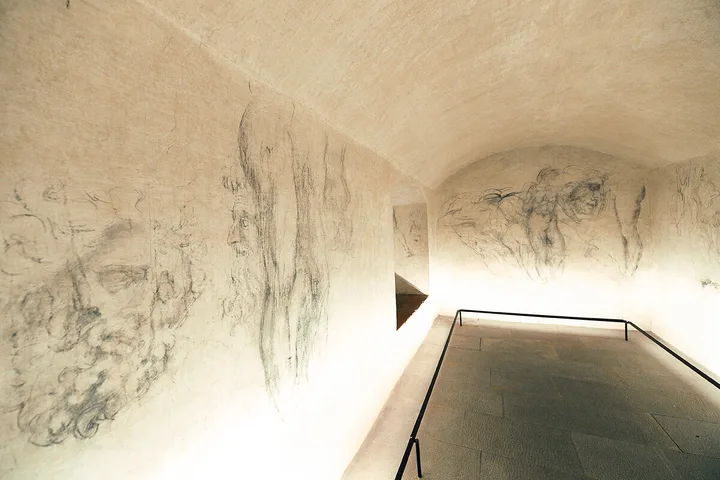
The room was sealed after he emerged and lost to memory for centuries. When it was rediscovered in 1975, the walls were covered in charcoal and chalk — studies of bodies, faces, architectural ideas, the private visual thinking of one of history’s most extraordinary minds. Drawn in the dark, under pressure, with no audience in mind. The most intimate work he ever made.