The Real Recipe Behind Earth-Like Planets
Building a Sample of Ten Small Worlds
To move from anecdote to pattern, the team compiled every documented exoplanet with a known mass and a diameter smaller than 2.7 times that of Earth. That produced a working list of ten planets. Ten is a modest number by some standards, but in observational astronomy, where each precise mass measurement requires significant telescope time, it represents a meaningful dataset. The researchers analyzed each planet’s mass-to-size ratio, calculated densities, and compared the results across the group. What emerged was not a random scatter of compositions — it was a structured relationship. As mass decreased, density tended to increase, which matched existing models predicting that smaller planets concentrate more of their mass into dense, rocky cores rather than extended gas envelopes.
Not Every Earth-Sized Planet Is Actually Earth-Like
One of the more clarifying results from the analysis was what did not hold up: the assumption that similar size implies similar composition. Among the ten planets studied, some Earth-sized worlds had surprisingly low densities — more consistent with thick water or ice layers than rock and iron. Size alone is not a reliable guide to what a planet is made of. This distinction matters enormously for the search for habitable worlds. A planet the size of Earth sitting in the right temperature zone around its star might sound promising, but if it is mostly ocean or wrapped in a crushing atmosphere, the surface conditions would be nothing like home. The research gave astronomers a sharper filter for sorting candidates.
The Size Cutoff That Changes Everything
When the team narrowed the sample to planets with diameters less than 1.6 times Earth’s, a clear pattern emerged. At that threshold and below, the relationship between mass and radius tightened considerably. These smaller planets followed a predictable curve — and both Venus and Earth fit neatly onto it. The implication is that planets below the 1.6 Earth-diameter mark are almost certainly rocky. Above that line, compositions become more variable and less Earth-like. Lead author Courtney Dressing of the Harvard-Smithsonian Centre for Astrophysics put it plainly: to find a truly Earth-like world, the search should concentrate on planets no more than 1.6 times Earth’s size. That is not a vague suggestion — it is a data-driven cutoff that significantly narrows the target list.
The Chemical Composition Matched Earth With Precision
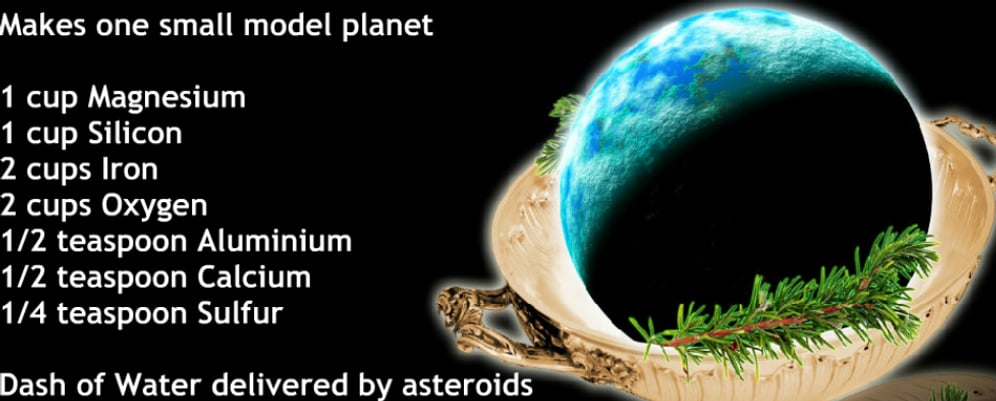
The most striking finding was not just that small rocky planets are dense and solid — it was how precisely their chemical makeup matched Earth’s. When the team worked through the compositional analysis for the rocky planets in the sample, they found the same relative proportions of elements that make up Earth: primarily iron and magnesium silicates, in ratios nearly identical to what geologists find in Earth’s mantle and core. This was specific enough that researchers described it as a literal recipe — quantifiable amounts of particular ingredients assembled in a consistent pattern. The Solar System, long assumed to be a special case, turns out to look much more like a standard outcome. As Dressing noted, rocky exoplanets appear to use the same basic ingredients, suggesting the process that built Earth is not unusual.