HISTORYWhat Ancient Korean DNA Reveals About Society7 min read
The Broader Picture of Ancient Korean Genetics
This study is the first to apply genome-wide analysis to skeletal remains from the Three Kingdoms period in Korea. That makes it a baseline — the starting point for a field that will likely expand significantly in coming years. The researchers explicitly called for further archaeogenetic work on the Korean Peninsula, arguing that additional sites will reveal more about population dynamics and family structures across ancient East Asia. The Imdang-Joyeong findings suggest that ancient Korean societies were not monolithic: different kingdoms may have had very different social structures, kinship systems, and practices. Comparing genetic data from Goguryeo or Baekje sites, when such remains become available and analyzable, could produce equally surprising results about the diversity of ancient Korean civilization.
What 78 Skeletons Tell Us About Power and Death
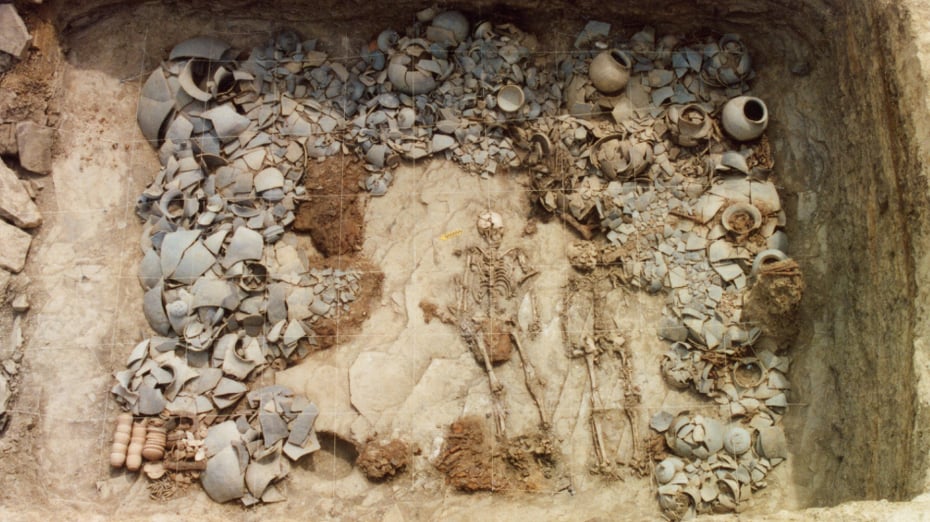
The study’s core contribution is methodological as much as historical. By combining archaeological context — who was buried where, in what position, with what grave goods — with precise genetic relatedness data, researchers produced a picture of Silla society that neither source could deliver alone. The bones of 78 people, arranged across two burial sites over more than a century, collectively describe a society with rigid hereditary stratification, a practice of family-scale ritual killing, a preference for marriage between relatives, and a kinship system organized around women. Each of those findings would have been speculative without the genetic evidence. Together, they offer one of the clearest windows yet opened onto the inner workings of an ancient Korean polity — and raise new questions that only future excavations will answer.