ANIMALSWhy Your Dog Keeps Sniffing There and What He Already Knows About You3 min read
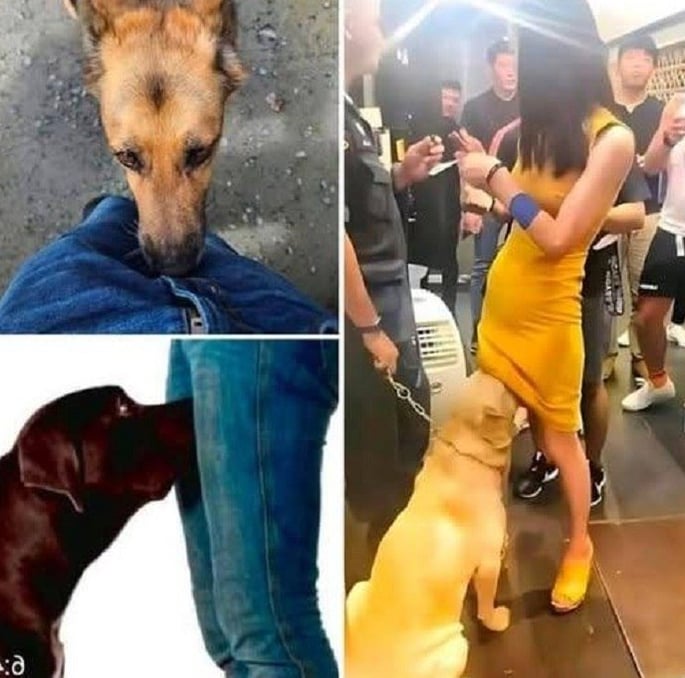
Your dog isn’t being rude. He’s doing something far more sophisticated than that — reading you.
Dogs live in a world built entirely of smell. Their olfactory system runs anywhere from 10,000 to 100,000 times more sensitive than a human’s, according to the American Kennel Club. While you experience a cup of coffee as coffee, your dog experiences the soil the beans grew in, the water temperature, the oils from the roaster’s hands. That’s the kind of microscopic detail they’re pulling off your body every time their nose swings toward your groin. It’s not a malfunction. It’s a superpower pointed at you.
Here’s the biology. Humans secrete pheromones — chemical signals dense with personal information — most heavily from the groin, armpits, and genitals. To a dog, that area is a neon billboard. It announces your hormonal state, your stress level, whether you’ve been near other animals, and potentially your health. When two dogs meet, they go straight for each other’s rear ends for exactly the same reason. Your dog applying that same logic to you isn’t inappropriate. It’s a translation error between species.
Hormonal changes make the signal louder. Menstruation, pregnancy, ovulation — each shifts the chemical composition of your scent profile in ways a dog can detect before you’ve noticed anything yourself. Some owners describe their pets becoming unusually attentive during early pregnancy, weeks before any test confirmed it. That’s not magic. That’s a nose doing what it was built to do. Beyond hormones, a growing body of research shows dogs can detect certain cancers, infections, and metabolic conditions through scent alone. Trained medical alert dogs pick up on blood sugar drops in diabetics seconds before a crisis hits. Not every dog has that precision, but the raw hardware is there in all of them.
So when your dog buries his face somewhere embarrassing at your cousin’s birthday party, he’s greeting a stranger the only way that makes biological sense to him. That doesn’t make it less awkward. A well-meaning Lab zeroing in on a new houseguest tends to clear a room fast. If public manners matter, training is straightforward: teach a firm sit or leave it command, reward the behavior you want, and redirect before the moment becomes a scene. Consistent reinforcement works. Punishment doesn’t — it creates anxiety, and anxious dogs sniff harder, not less.
Watch for the line between curiosity and compulsion. A dog that sniffs and moves on is fine. A dog that returns obsessively to one person, ignores commands, or pairs sniffing with pacing and whining is telling you something different. That’s worth a vet visit or a session with a certified animal behaviorist. Compulsive behavior usually signals anxiety or overstimulation, not a character flaw.
Your dog knows things about you that you haven’t said out loud. He knew you were stressed before you admitted it. He tracked you through the front door by your specific chemical signature from the other side of the house. The nose-to-groin moment is just the most visible expression of that capacity — the one that makes humans flinch. Underneath it is a relationship built on a kind of attention that most people never receive from another living thing. Strange, yes. Worth understanding, absolutely.