TRAVELAvignon Has a Side Most People Never See8 min read
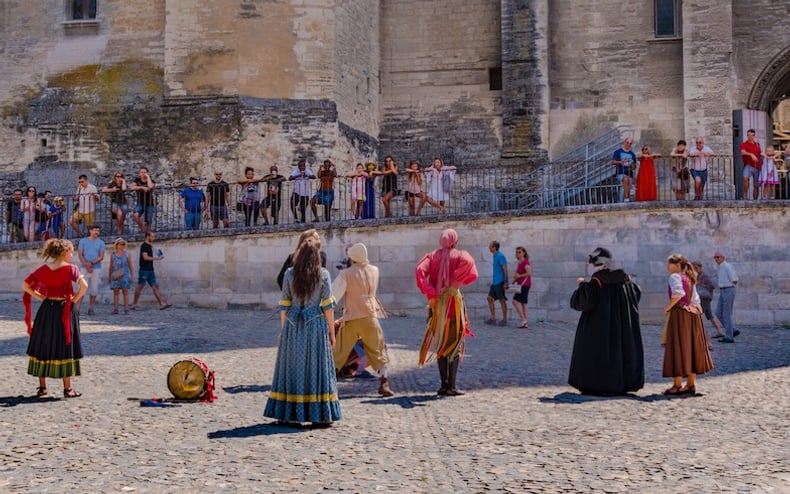
The City That Ran the Catholic Church
For nearly seven decades in the 14th century, the center of Western Christianity was not Rome — it was a walled city on the banks of the Rhône River in southern France. Between 1309 and 1376, seven successive popes made Avignon their home, turning this Provençal city into the most powerful religious address in the world. That history left behind an extraordinary concentration of medieval architecture, papal monuments, and cultural institutions that most European capitals cannot match. Today, the old town remains enclosed within well-preserved 14th-century ramparts, and the streets inside feel genuinely unchanged in their layout, scale, and atmosphere. Understanding why the papacy relocated here — fleeing violent unrest in Rome after Pope Clement V’s election — gives every street corner a different kind of weight.
The Palace That Rewrote Medieval Architecture
The Palais des Papes is not a church or a cathedral. It is a fortress. Pope Clement V commissioned what became one of the largest and most significant Gothic buildings in all of Europe, and his successors kept expanding it. The result is an immense complex of grand halls, opulent chambers, and preserved courtyards that communicate, without subtlety, just how much temporal power the medieval papacy held. Six popes were elected here between 1334 and 1394 — Benedict XII, Clement VI, Innocent VI, Urban V, Gregory XI, and Benedict XIII. The palace today houses exhibitions covering religious artifacts and artistic works from the papal period. Climbing the towers and ramparts rewards visitors with sweeping views over Avignon’s roofline and the Rhône valley. The view at sunset, in particular, is worth timing deliberately.