
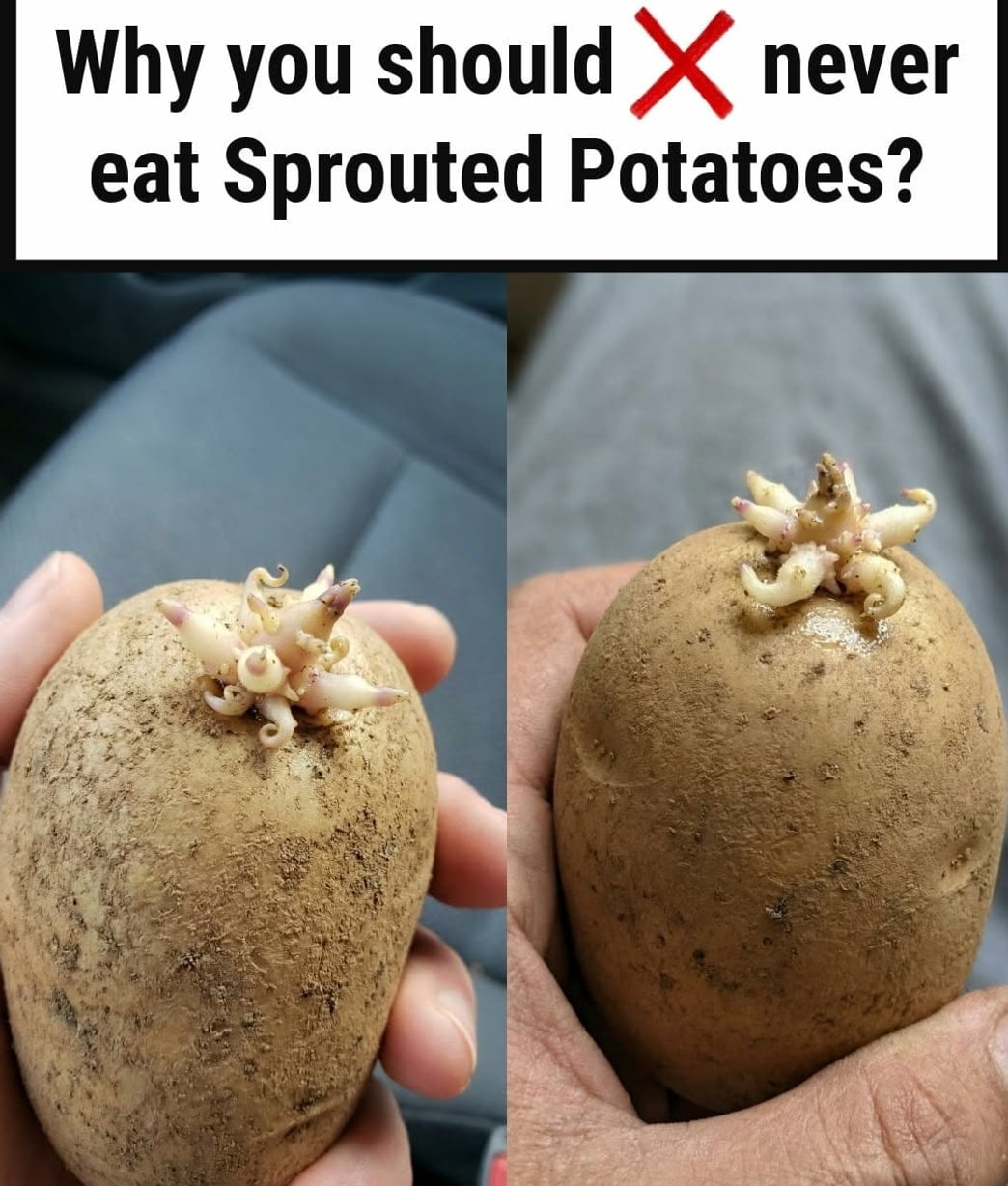
Before You Toss Those Creepy Sprouted Potatoes You Should Know This
The Pantry Discovery You Were Not Ready For
You know the moment. You’re rooting around for something — pasta, a snack, anything — and your hand closes around something that feels wrong. The bag of potatoes you forgot about. Except they haven’t just softened or gone a little wrinkly. They’ve gone full science experiment. Long, pale tendrils reaching toward whatever light they could find, like something out of a low-budget horror film.
The instinct is to throw the whole bag directly into the trash. But before you do, it’s worth asking the question: are they actually dangerous, or just ugly?
The Compound Hiding Inside Every Sprout
When a potato starts to sprout, it ramps up production of compounds called glycoalkaloids — specifically solanine and chaconine. These aren’t contaminants from outside. The potato makes them on purpose, as a built-in chemical defense against insects and disease. The plant is, in its slow vegetable way, fighting for its life.
In low concentrations, glycoalkaloids pass through your system without incident. Push past a threshold and they’ll make you regret it: nausea, stomach cramps, vomiting, a headache that lingers. The sprouts themselves carry the highest concentration, but the flesh directly underneath and around them is compromised too.
One thing that surprises most people: cooking doesn’t fix it. Boiling, roasting, frying — none of it reliably breaks down solanine. Heat handles bacteria. It does not handle this.
When to Trim and When to Walk Away
A few small sprouts on an otherwise firm potato? Cut them off — generously, not with a surgeon’s precision — and dig out any green-tinged flesh beneath. That green color is chlorophyll, which develops alongside the glycoalkaloids and acts as a useful warning flag. If the potato underneath the cut looks white and solid, you’re fine.
The calculation changes fast when the sprouts are long and aggressive, when the potato has gone soft and wrinkled, or when the flesh smells off. At that point the damage isn’t surface-level anymore. The whole potato is compromised, and no amount of creative knife work is going to rehabilitate it.
The honest rule: a sprouted potato earns its place in your pot through a quick, unsentimental inspection. Firm flesh, shallow sprouts, no green tinge — it stays. Anything else goes straight to the compost, without guilt.