CURIOSITYNintendo’s Most Important Year Had Surprisingly Little to Do With Pokémon5 min read
The Console That Changed the Controller Forever
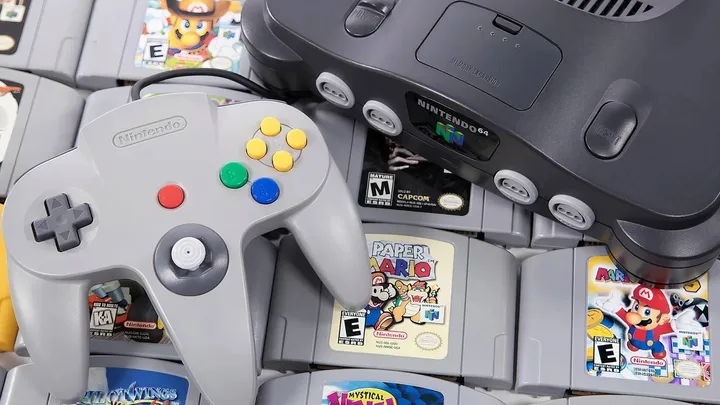
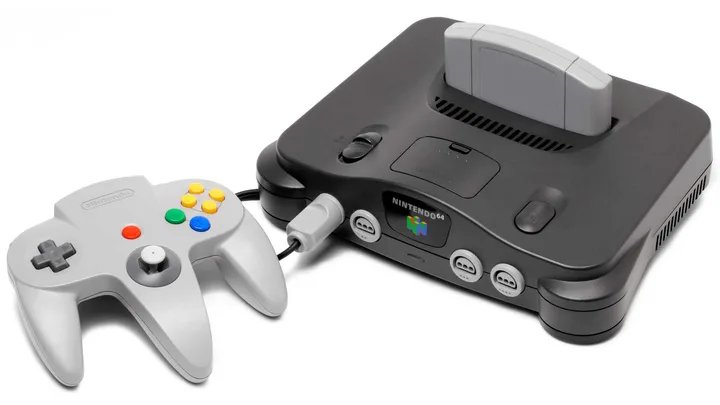
The Nintendo 64 launched in Japan in June 1996, in North America in September. It was the main event. It was also, commercially, a rough story — 32 million units lifetime against the PlayStation’s 102 million. Sony ate Nintendo’s lunch that generation, largely because the PS1 used optical discs while the N64 stuck with cartridges. Faster load times, more durable hardware — but higher production costs and lower storage capacity made the platform a hard sell for third-party developers who needed flexibility.
The controller told a different story. It introduced the thumbstick to home console gaming. One analog stick, positioned at the center of a three-pronged grip, and suddenly navigating 3D space felt like something a human could actually do. Accessories plugged into the communication port: rumble packs, memory cards, a Game Boy adapter that connected directly to Pokémon Stadium. The hardware was forward-thinking even when the business model wasn’t.
The Game That Invented Modern Mario
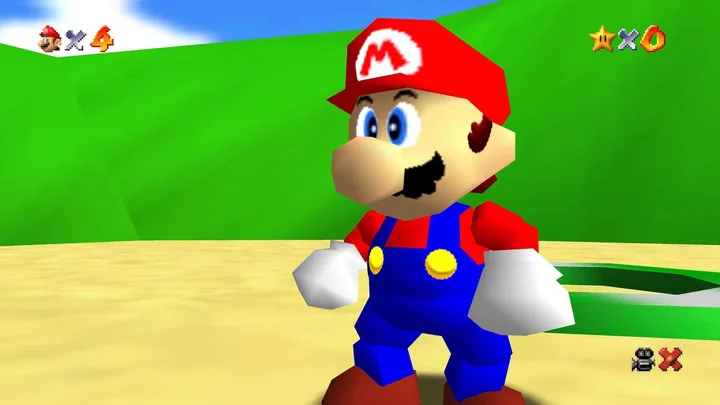
Super Mario 64 launched alongside the console. Getting Mario into three dimensions was the single most technically demanding thing Nintendo had ever attempted. The original games were tight, finely tuned machines — every jump calibrated through years of iteration. Rebuilding that feel in 3D, with a camera that could swing freely around the player, was genuinely uncharted territory.
It worked. Movement felt responsive from the first session. The camera — still a weakness in most 3D games today — was handled with enough intelligence that players rarely fought it. Each of the 15 worlds offered space to explore rather than a corridor to sprint through. Super Mario 64 didn’t just launch the N64; it handed every 3D platformer that followed a blueprint, and most of them still haven’t topped it.