HISTORYThe Hidden History Behind Mardi Gras That Most Revelers Never Learn4 min read
Purple, Gold, and Green — By Design
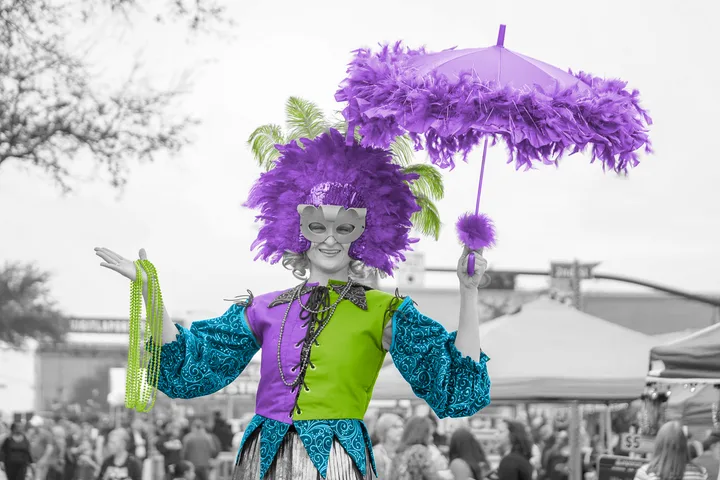
Those three colors draped across every float, bead strand, and plastic cup aren’t random. They trace back to a single afternoon in 1872, when the first Rex parade rolled through New Orleans and someone had to pick a palette. Carnival historian Errol Laborde argues the choice followed the laws of heraldry — the medieval system governing flags and coats of arms — which required three fields composed of colors and metals. Gold counts as a metal. The rest was up for grabs.
The Rex Organization has never explained why purple, gold, and green specifically. But twenty years later, they made the symbolism official. The theme of the 1892 Rex parade was “Symbolism of Colors,” and each float carried one hue with a declared meaning: purple for justice, gold for power, green for faith. A whole civic theology, embroidered onto carnival beads.
Alabama Got There First
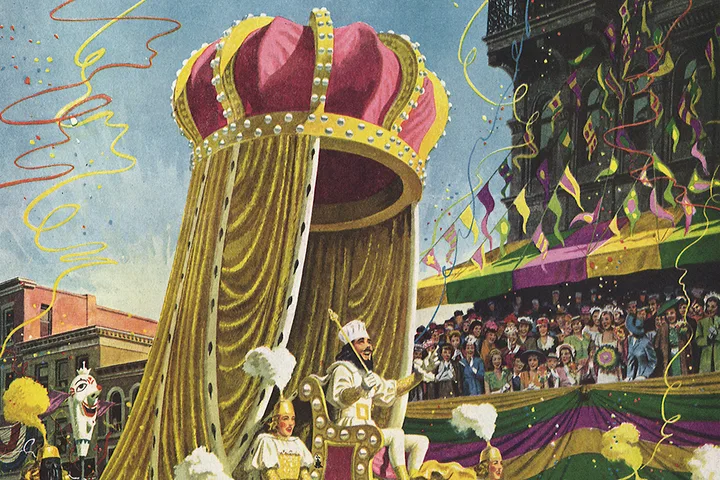
New Orleans owns Mardi Gras in the popular imagination. It doesn’t own the history. The first recorded Mardi Gras celebration on American soil happened in Mobile, Alabama — and it happened because of timing and geography, not planning.
On March 2, 1699, French-Canadian explorer Jean Baptiste Le Moyne Sieur de Bienville landed 60 miles south of present-day New Orleans, the night before Mardi Gras. His crew named the spot Pointe du Mardi Gras right there on the riverbank. By 1702, Bienville had moved east along the Gulf to establish Fort Louis de la Louisiane near the Mobile River. A year later, a local Frenchman named Nicholas Langlois organized a celebration — the first officially recorded Mardi Gras in the United States. New Orleans wasn’t even founded yet. Regular Mardi Gras festivities didn’t take hold in NOLA until the 1730s, a full three decades later. Mobile still celebrates every year, drawing roughly a million visitors — only slightly behind New Orleans’ 1.4 million.