HISTORYThe Hidden History Behind Mardi Gras That Most Revelers Never Learn4 min read
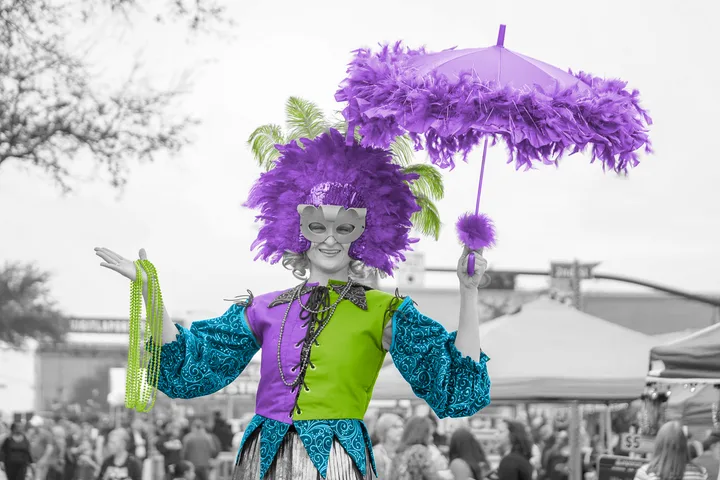
The Societies Behind the Spectacle
Every parade needs organizers. In Mardi Gras country, those organizers are called krewes — an archaic spelling of “crew” that first appeared in New Orleans no later than 1857. They are private social clubs that exist almost entirely to plan, fund, and execute the Carnival season. They build the floats. They design the costumes. They throw the balls. They elect the Rex, whose parade serves as the season’s grand finale.
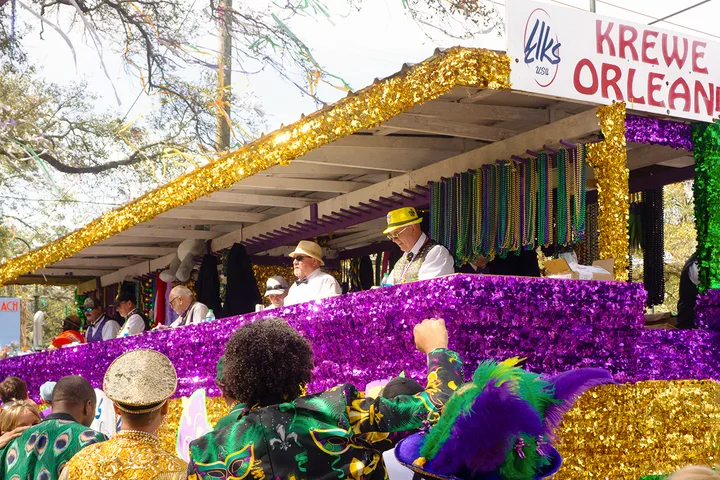
The krewe tradition itself was borrowed from Mobile, where the Cowbellion de Rakin Society had been running mystic processions since 1830. New Orleans adapted the model and turned it into something denser and more secretive. The oldest New Orleans krewe on record is the Mistick Krewe of Comus, founded in 1857, whose costumed street parade set the template others followed. Today, the largest truck float krewe in the city is the Krewe of Elks Orleans, founded in 1935 — 50 individually designed floats, 4,600 riders, all rolling under the same banner.
Masks Are Not Optional
For spectators, Mardi Gras is a free-for-all. For float riders, it’s governed by rules with real teeth. In Jefferson Parish, removing your mask during a parade isn’t just frowned upon — it can get you removed from the parade and hit with a fine of up to $500.
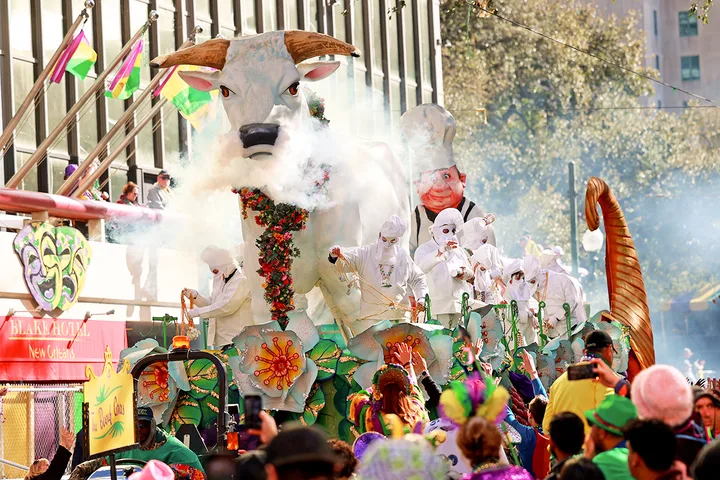
New Orleans also bans the commercialization of krewe-organized parades. Corporate logos on floats and advertising materials thrown into the crowd are violations the city actively enforces. The goal is to protect the parade’s artistic integrity and annual theme — the idea that each krewe’s procession is a creative statement, not a sponsored activation.
More recently, the environmental reckoning arrived. In 2025, the Krewe of Freret became the first New Orleans krewe to ban plastic beads outright. The math behind that decision: an estimated 200,000 sets of beads end up snarled in trees, clogging storm drains, and filling landfills each year.