SCIENCEThe Real Recipe Behind Earth-Like Planets7 min read
The Size Cutoff That Changes Everything
When the team narrowed the sample to planets with diameters less than 1.6 times Earth’s, a clear pattern emerged. At that threshold and below, the relationship between mass and radius tightened considerably. These smaller planets followed a predictable curve — and both Venus and Earth fit neatly onto it. The implication is that planets below the 1.6 Earth-diameter mark are almost certainly rocky. Above that line, compositions become more variable and less Earth-like. Lead author Courtney Dressing of the Harvard-Smithsonian Centre for Astrophysics put it plainly: to find a truly Earth-like world, the search should concentrate on planets no more than 1.6 times Earth’s size. That is not a vague suggestion — it is a data-driven cutoff that significantly narrows the target list.
The Chemical Composition Matched Earth With Precision
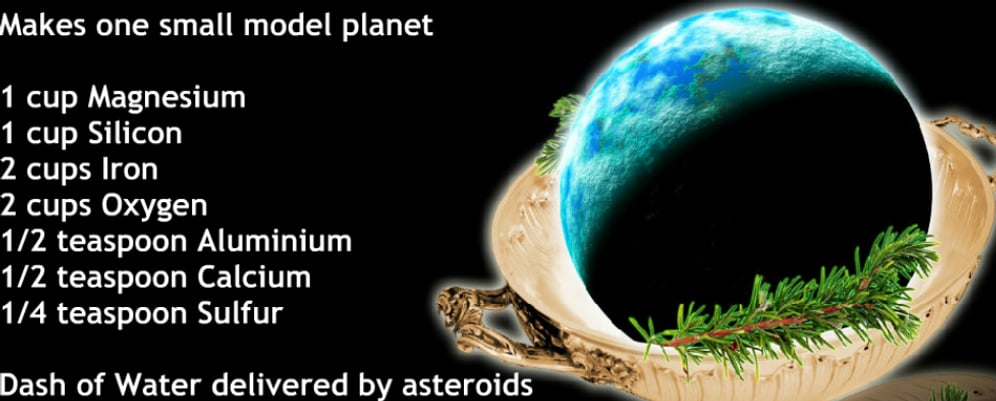
The most striking finding was not just that small rocky planets are dense and solid — it was how precisely their chemical makeup matched Earth’s. When the team worked through the compositional analysis for the rocky planets in the sample, they found the same relative proportions of elements that make up Earth: primarily iron and magnesium silicates, in ratios nearly identical to what geologists find in Earth’s mantle and core. This was specific enough that researchers described it as a literal recipe — quantifiable amounts of particular ingredients assembled in a consistent pattern. The Solar System, long assumed to be a special case, turns out to look much more like a standard outcome. As Dressing noted, rocky exoplanets appear to use the same basic ingredients, suggesting the process that built Earth is not unusual.