ANIMALSThe Sneaky Evolutionary Tricks That Made Dogs Impossible To Resist3 min read
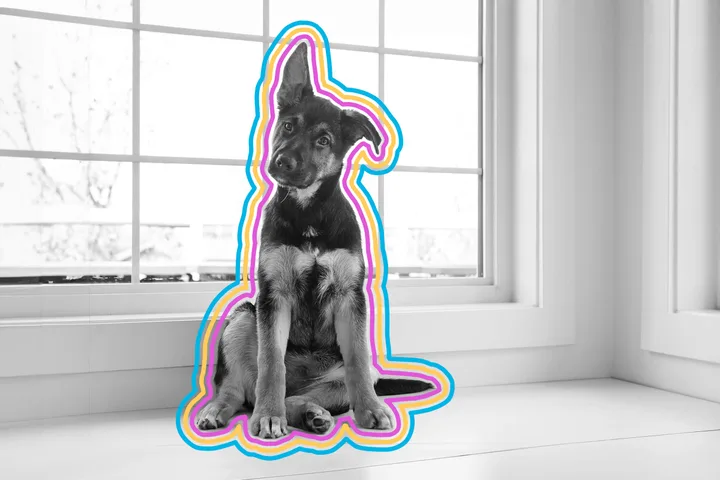
The Eyes That Broke Evolution
Nobody invented “puppy dog eyes.” Dogs grew them.
Somewhere between 15,000 and 40,000 years ago, wolves began drifting toward human settlements. What followed was one of the most successful social experiments in natural history. Wild predators slowly reshaping themselves into creatures humans couldn’t help but protect, feed, and love. The exact timeline is murky, but the results are written on every dog’s face.
Take those eyebrows. Dogs developed a specific muscle called the levator anguli oculi medialis that runs along the outer edge of the eye. When flexed, it pulls the brow up and inward, exposing more white and making the eye look startlingly large, almost infant-like. Wolves don’t have it. The muscle exists in dogs alone, and its effect on humans is immediate: it triggers the same nurturing instinct that fires when we look at a baby.
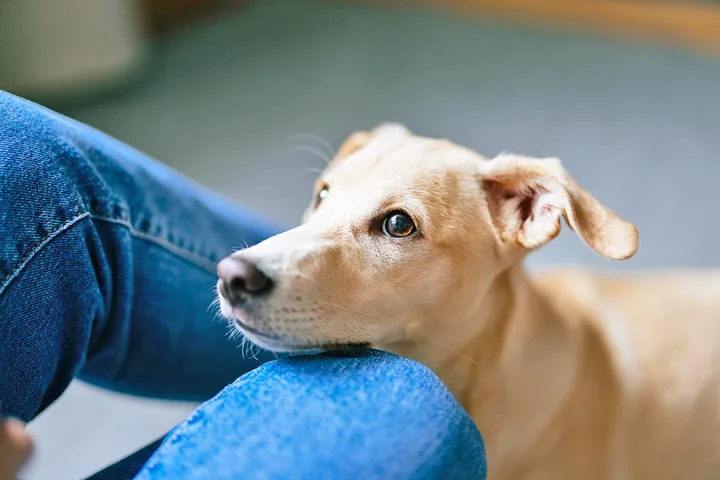
What Dogs Actually Understand When You Talk
The old assumption is that dogs respond to tone, not words. Science is complicating that picture.
Dogs evolved a sophisticated ability to read human intention: gestures, facial expressions, the shift in your voice when you’re upset. When you point at something, your dog follows the gesture with a comprehension most other animals can’t manage. That’s not a party trick. It’s thousands of years of co-evolution, social instincts sharpened specifically around humans.
More surprising: dogs may parse actual words. In one study, researchers showed dogs objects that either matched or didn’t match a word they’d just heard. Brain activity spiked when the match was wrong, the same expectation-violation response seen in human brains. They’re tracking more than we ever assumed.