ANIMALSThe Sneaky Evolutionary Tricks That Made Dogs Impossible To Resist3 min read
The Bark That Was Built for Us
Wolves bark. But not much. Their default is the howl, built to carry across territory, to signal the pack, to mark distance between bodies in the dark.
Domestic dogs flipped that. Barking evolved into something almost conversational: sharp warning bursts, low rumbling play sounds, the frantic high-pitched yelp of a dog who has been waiting for his walk for three hours. Each has distinct acoustic signatures — pitch, timing, repetition — and humans decode them with surprising accuracy. In studies where people with varying levels of dog experience listened to recordings, most correctly identified whether a dog was afraid, excited, or threatening. No training required.
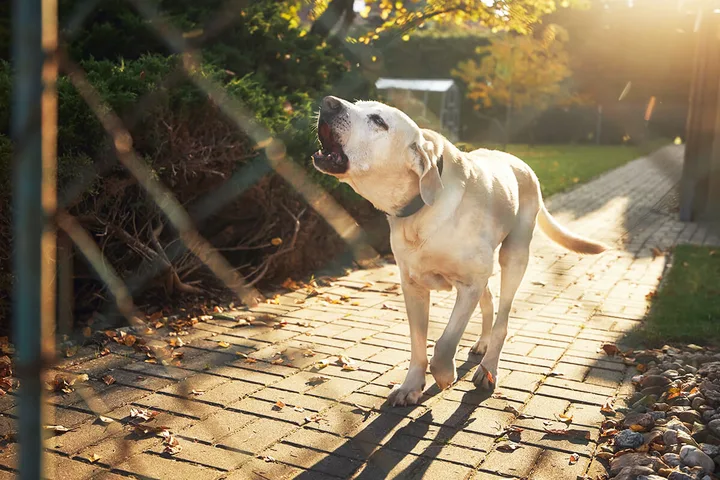
It’s a crude language compared to ours. But it’s a language built to talk to us specifically, not to other dogs, not to wolves, but to the species standing at the campfire with the food.
Eye Contact as Biochemistry
Direct eye contact is a threat display in most of the animal kingdom. Dogs chose a different strategy.
When a dog holds your gaze, both of you experience a surge of oxytocin, the hormone released between mothers and newborns. The mechanism is identical. Dogs evolved to seek this mutual gaze, and in doing so, they found a direct line into one of the deepest bonding circuits in the human nervous system. Other animals almost never access this channel. Dogs built a permanent residence there.
The Secret Power of Never Growing Up
Most adult animals shed their juvenile playfulness. Maturity means territory, competition, survival. Play is for the young.
Dogs never got that memo. Through a process called neoteny, domestic dogs retained youthful behaviors, including relentless playfulness, well into adulthood. Over generations of domestication, the dogs that stayed playful were the ones humans kept close. Playful dogs bonded. Bonded dogs ate. Those genes kept passing forward.
The feedback loop is real. Play triggers endorphin release in both species. A game of fetch isn’t just exercise. It’s a neurochemical contract, renewed every single time. Whatever ancient wolf first crept toward a human fire started something neither species has shown any sign of wanting to stop.