HISTORYWhat Ancient Korean DNA Reveals About Society7 min read
Why This Site Is So Scientifically Valuable
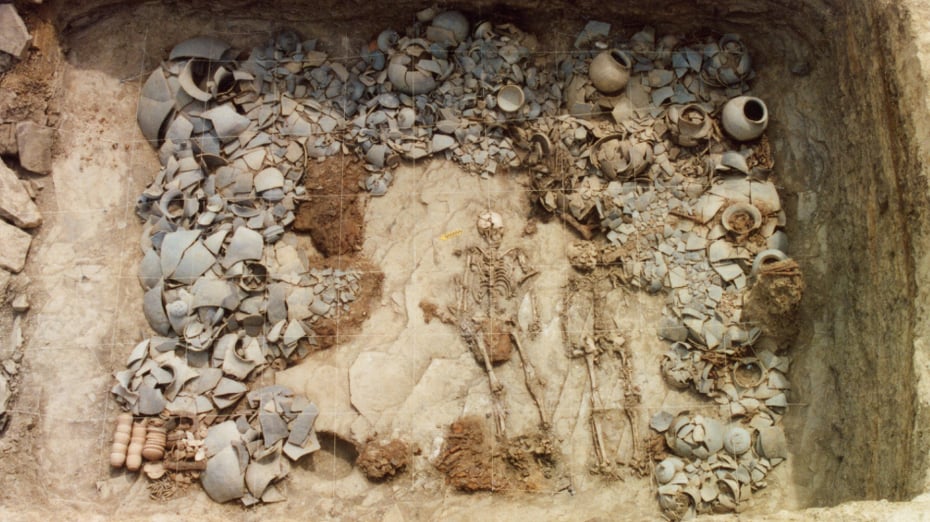
Skeletal preservation from the Three Kingdoms period is genuinely rare in Korea. The climate, soil conditions, and burial practices of the era combine to make intact, analyzable bone material unusual. The Imdang-Joyeong complex represents an exceptional case — a large collection of remains from a specific, well-documented historical context. Jack Davey, director of the Early Korean Studies Center in Cambridge, Massachusetts, called the study an important contribution to Korean archaeology precisely because of this scarcity. He noted that the apparent presence of a sacrificial caste outside of the Silla political core has significant implications for understanding how Silla society was organized beyond its capital. The site may serve as a template for how future archaeological genetics work is conducted across the Korean Peninsula.
What the Maternal Lineage Structure Suggests
Kinship systems in ancient societies tend to follow one of a few patterns. Most archaeological genetics research on ancient Europe and East Asia has documented patrilineal structures — descent and property passing through the male line. The Silla pattern documented at Imdang-Joyeong is different. The kinship network reconstructed from the 13 family trees is organized around women and their descendants. This is not the same as a matriarchal political system — the tomb owners appear to have been male elites — but it does suggest that biological relatedness through women was the organizing principle of how families were grouped, buried, and possibly defined socially. The researchers note that this structure is distinct from comparable ancient societies and warrants further investigation through additional excavations and genetic analyses.