SCIENCELeap Years Are Humanity’s Oldest Calendar Hack and They Still Don’t Quite Work5 min read

The Pope Who Couldn’t Stand Being Ten Days Behind
Sosigenes was brilliant, but not quite brilliant enough. The Julian calendar ran 11 minutes long each year compared to the actual solar year. Sounds trivial. Across centuries, it isn’t. By the 1500s, the calendar had drifted a full 10 days behind where it stood when the Council of Nicaea fixed the date of Easter back in 325 CE. Easter was sliding toward summer. Pope Gregory XIII had had enough.
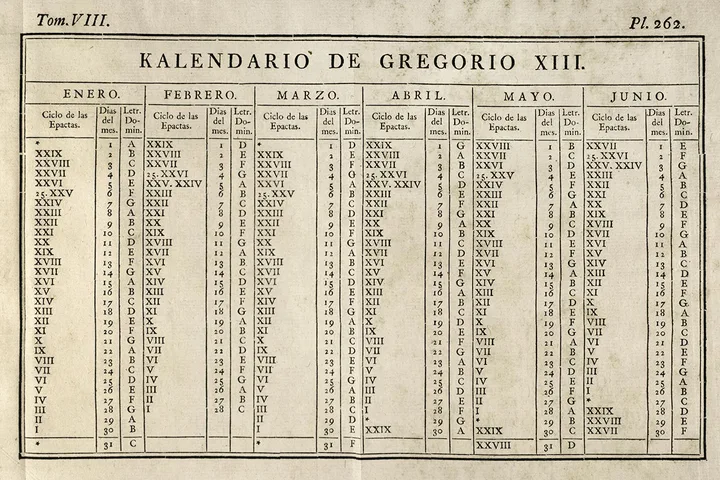
Gregory XIII — also not a mathematician — turned to Italian scholar Aloysius Lilius and German mathematician Christopher Clavius. Their solution was elegant: century years only get a leap day if they’re divisible by 400. That’s why 1700, 1800, and 1900 weren’t leap years. The year 2000 was. And 2100 won’t be. A small tweak, but enough to nudge the average year length just below 365.25 days and make the Gregorian calendar far more accurate than anything Rome had ever produced.
Close Enough — But Not Actually Correct
The Gregorian calendar averages 365.2425 days per year. The actual solar year is 365.24219 days. The gap is about 26 seconds annually. That sounds like nothing until you do the long math: the Gregorian calendar will drift one full day off solar reality by the year 4818. Whoever’s alive then — human, posthuman, whoever has inherited this mess — will face the exact same argument Caesar and Gregory XIII faced. Another fix, another fudge.
Two thousand years of effort and the best result is a calendar that stays accurate for another 28 centuries. Time is harder than it looks.