
Thailand Has Islands Most Tourists Never Find
Ko Kradan — Where Roads Don’t Exist
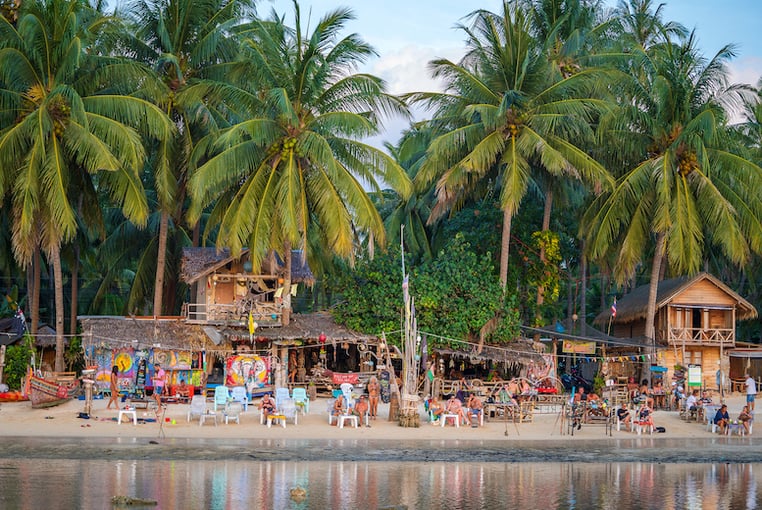
Ko Kradan sits in Trang province and the Thai tourist board has named it one of the country’s most beautiful islands. What makes it stand apart is the complete absence of roads or villages. The island is essentially a string of beach resorts on one side, with Hat Chao Mai National Park blanketing everything else. The main beach delivers a long stretch of powdery white sand against deep blue water, with limestone karsts rising in the distance and a coral reef just offshore. Activities are deliberately scarce — that’s the point. Visitors come to sunbathe, sip cocktails, and kayak around the island’s perimeter. In the evenings, a forest path leads to Chonglom Bay Beach, where the sunsets rank among the best in southern Thailand. For travelers who find most Thai islands too commercial, Ko Kradan answers that complaint directly.
Ko Phayam — No Cars, No Cell Signal
Despite being the second-largest island in the Andaman Sea, Ko Phayam has largely avoided the tourist overload that affects many Thai islands. There are no cars here, cell reception is limited, and the permanent population sits just above 500. A 45-minute speedboat from the port town of Ranong puts it within practical reach of Bangkok, yet it feels genuinely remote. The island splits its character between two main beaches: Aow Yai handles the action — boogie boarding, surfing — while Aow Khao Kwai (Buffalo Bay) is quieter, edged by mangroves and dramatic rock formations. Beyond the beaches, Ko Phayam supports hiking, biking, yoga, diving, and dusty scooter trails. The local food scene punches well above its weight, particularly for vegetarians, which surprises most first-time visitors.
The Ang Thong Islands — A Protected Archipelago Worth the Detour
Declared a national park in the 1980s, the Ang Thong Islands — translated as Golden Bowl Islands — form a group of more than 40 isles defined by limestone cliffs, coral reefs, dense jungle, and white sand beaches. Most of the smaller islands are off-limits to tourists, but several larger ones are accessible via day trips from Ko Samui or Ko Phangan. Ko Paluay is the only inhabited island in the archipelago, home to a community of sea gypsies. Ko Mae, known as the Mother Island, holds a beautiful beach and the striking Emerald Lake. Ko Sam Sao has a notable coral reef, and Ko Wua Ta Lap offers rustic overnight bungalows for those who want to stay beyond the day-trip crowd. Wildlife across the park includes langurs, otters, sea turtles, and over a hundred bird species.
Ko Samet Stays Dry When Every Other Island Gets Rained On
Ko Samet sits along Thailand’s eastern seaboard, roughly three hours from Bangkok, and records less rainfall than almost any other island in the country. That weather advantage makes it a reliable weekend escape year-round, which explains its popularity with Bangkok residents. Part of a national park and named after the cajeput trees that grow there, Ko Samet balances protected nature with a lively social scene — fire juggling and beach barbecues are regular fixtures. Haad Sai Kaew, known as Diamond Beach, is the most popular stretch, lined with bars and restaurants. The 19th-century poet Sunthorn Phu set scenes from his epic Phra Aphai Mani on this beach, and statues from the poem still stand here. For quieter options, Ao Hin Khok and Ao Tubtim offer more seclusion. Jet skiing, parasailing, snorkeling, and diving fill out the activity list.