HOMEThe Container Mistake That Keeps Hummingbirds Away7 min read
Calibrachoas Fill the Gaps Nobody Else Can
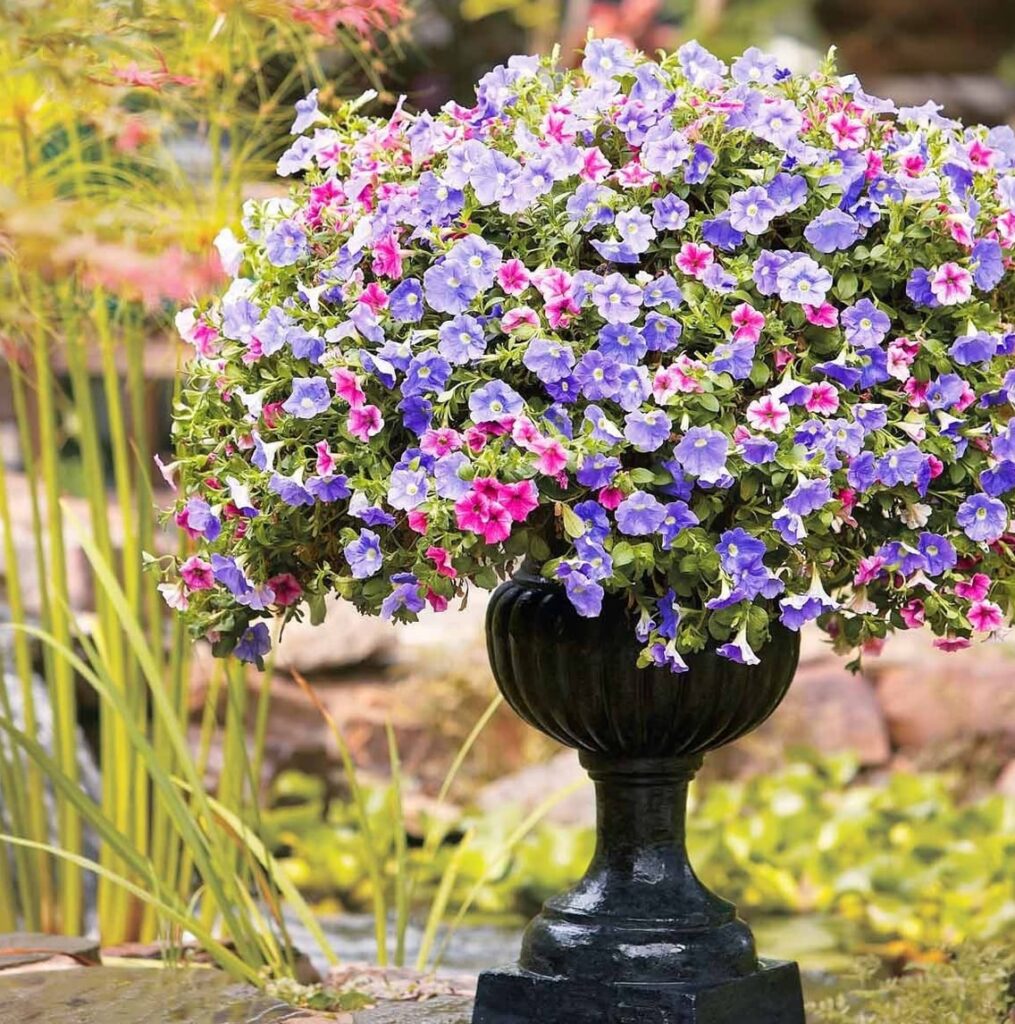
Calibrachoas are sometimes described as miniature petunias, and while they belong to the same plant family, their growth habit is distinct. They produce hundreds of small, trumpet-shaped flowers on trailing stems, covering the sides and base of a container with dense color. Hummingbirds visit calibrachoas regularly, attracted by the sheer density of blooms and the easy access the flower shape provides. What makes calibrachoas especially valuable in a container combo is their reliability. They do not need deadheading — spent flowers drop on their own and new ones replace them quickly. This means the container stays visually full without much intervention. They also come in a wide range of colors, which makes it easy to coordinate or contrast with salvias and petunias in the same pot. In a three-plant combo, calibrachoas typically handle the trailing, spreading role most effectively.
Placement Does More Work Than the Plants Alone
Even the best container combination will underperform if it is placed somewhere hummingbirds are unlikely to find it or feel comfortable using it. Hummingbirds are territorial and observant — they notice feeders, water sources, and flower clusters and build mental maps of where these resources are located. Placing a nectar container near an existing sugar-water feeder gives arriving birds an immediate connection between the two food sources and increases the chance they investigate the flowers. A sunny balcony or south-facing wall gives the plants the light they need to bloom heavily. A shady corner can work for some arrangements, but bloom production typically decreases in low light, which reduces the nectar supply and, in turn, the hummingbird traffic. The flexibility of containers means you can experiment and move things until you find what works for your specific yard.