HISTORYThe Real Reasons Six Beloved Sports Teams Got Their Famous Names5 min read

The Hockey Team Named After a Song
Most teams name themselves after predators or geography. The St. Louis Blues named themselves after a song. W.C. Handy wrote “St. Louis Blues” in 1914, and it became one of the most covered compositions in American music—Louis Armstrong played it, Bessie Smith sang it, Bing Crosby recorded it. The tune got everywhere.
When the Blues joined the NHL as an expansion franchise in 1967, owner Sid Salomon Jr. saw the song as a direct line to the city’s soul.
“No matter where you go in town there’s singing. That’s the spirit of St. Louis.”

The early years were bittersweet proof of that spirit. The Blues made the Stanley Cup Finals in 1968, 1969, and 1970—swept in all three series. They finally hoisted the Cup in 2018, more than half a century after that first agonizing loss. The song outlasted the heartbreak.
A Brooklyn Survival Skill That Followed the Team to California
The Dodgers were Brooklyn’s team long before they were Los Angeles’s. Founded in 1883 as the Grays, then renamed the Bridegrooms, the franchise picked up its lasting nickname from the streets. By the 1890s, electric trolley cars had taken over Brooklyn, and they were genuinely terrifying—faster than anyone expected, prone to accidents, killing children with grim regularity. Dodging one wasn’t a punchline. It was a necessary urban skill.
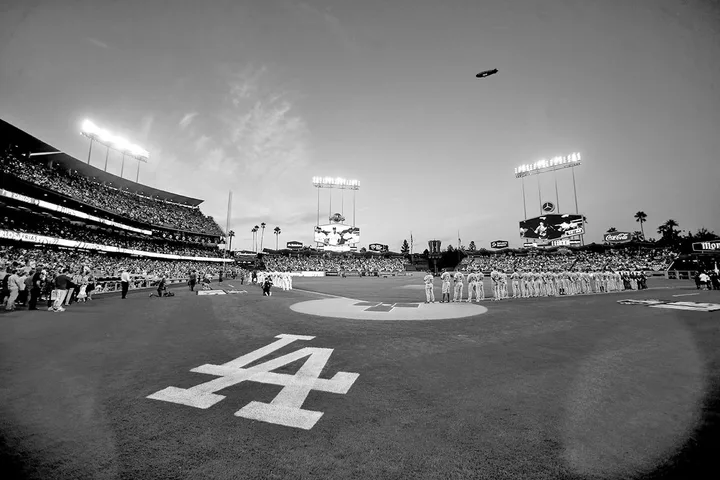
Writers began calling Brooklyn residents “trolley dodgers,” and the team absorbed the label. By 1932, it was official. One historian described the electric streetcar as “a symbol of the chaotic nature of modern, urban life”—which gives the name a far darker edge than it carries today.
The team moved to Los Angeles in 1958, a city famously hostile to public transit. Nobody dodges trolleys in LA. But the name came anyway, dragging a slice of 19th-century Brooklyn street life to the other coast.