HISTORYThe Strange and Scandalous Secrets Behind the Washington Monument4 min read

Five Years at the Top of the World
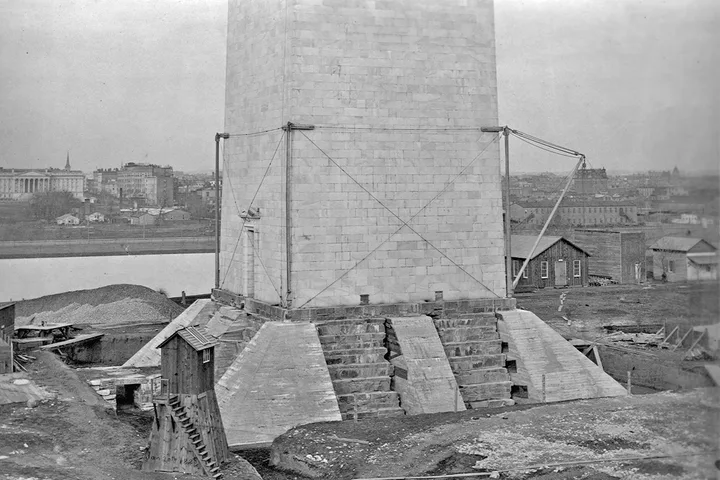
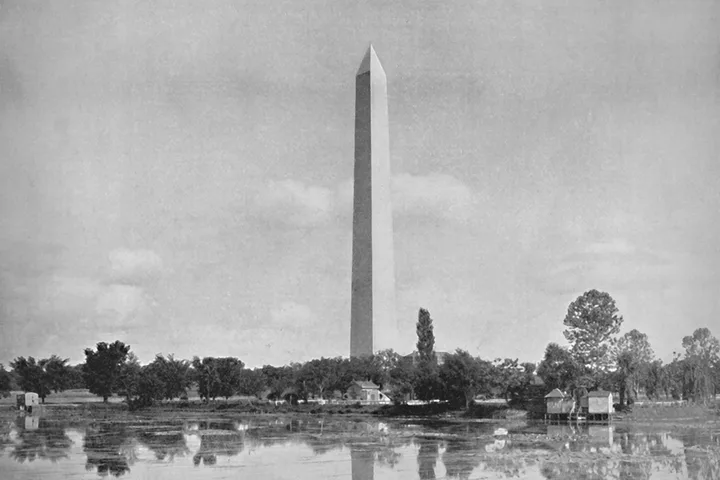
The Washington Monument took 36 years to build. Funding dried up, politics intervened, the Civil War happened — and when construction finally wrapped on December 6, 1884, the finished obelisk stood 555 feet and 5.125 inches tall. That made it the tallest structure on Earth.
It had just stolen the title from Cologne Cathedral, Germany’s gothic masterpiece that had held the record since 1880 at 516 feet. The monument didn’t hold the crown long. Five years later, the Eiffel Tower shot past it at 1,083 feet. Paris won that round decisively.
The obelisk remained the tallest human-made monument in the United States until 1939, when the San Jacinto Monument in La Porte, Texas edged it out at 567 feet. Today it ranks third domestically, also surpassed by the 630-foot Gateway Arch in St. Louis.
No Mortar. No Steel. Just Gravity.
Most stone buildings rely on mortar to bind blocks together. The Washington Monument doesn’t. Its marble blocks are held in place by their own weight and friction — the same basic physics keeping the Egyptian pyramids upright. Engineers used mortar on the project, but only as weatherstripping around joints, not as structural glue.
There’s no steel skeleton inside. No rebar, no concrete core, nothing. Al Roker once described it on Today: the monument “is built the way the pyramids were … It is the weight of the stones that actually keeps [the monument] together.”
That quirk earns it a remarkable distinction. According to Carol Johnson of the National Park Service, the Washington Monument is technically the world’s tallest free-standing stone structure.