HISTORYThe Strange and Scandalous Secrets Behind the Washington Monument4 min read
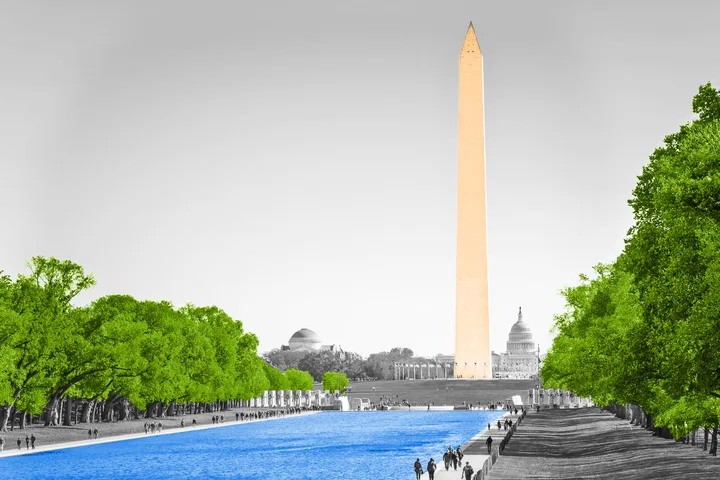
The Pope Sent a Stone. Then It Vanished.
During construction, donors from around the world contributed commemorative stones to be embedded in the monument’s interior walls. All told, 193 made it in — including one of Alaskan jade and another built from fragments of the Parthenon in Greece.
Pope Pius IX added one on behalf of the Catholic Church. It read “A Roma Americae” — From Rome to America — carved from stone taken from the ancient Temple of Peace in Rome. Not everyone was pleased. Anti-Catholic nativist groups, especially the Know Nothing Party, erupted.
“This gift of a despot, if placed within those walls, can never be looked upon by true Americans but with feelings of mortification and disgust.”
Their response was direct. In 1854, nine anonymous Know Nothing members broke in, stole the pope’s stone, smashed it beyond recognition, and threw the pieces into the Potomac River. The replacement didn’t arrive until 1982, when Pope John Paul II sent a replica to finally take its place.
A Luxury Metal Sitting at the Summit
The original design called for a flat stone top. Practical engineers had a different idea: finish it with a pointed metal tip to serve as a lightning rod. Thomas Lincoln Casey Sr., overseeing the final construction phase, consulted Philadelphia metallurgist William Frishmuth, who recommended aluminum.
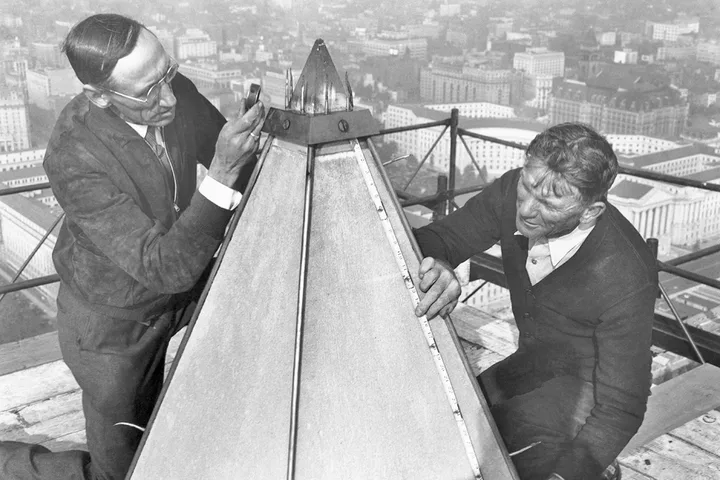
In 1884, aluminum wasn’t cheap filler — it was more precious than silver. Frishmuth cast an 8.9-inch, 100-ounce aluminum pyramid, the largest piece of the metal ever produced at the time. Before shipping it to Washington, he put it on display at Tiffany’s in New York City.
The cap went on December 6, 1884, completing the monument. It didn’t hold up as well as hoped. Lightning strikes whittled the tip down by three-eighths of an inch within six months. In July 1941, it nearly got melted down as part of a nationwide aluminum scrap drive for the World War II war effort. It survived. It’s still up there.