
What Ancient Korean DNA Reveals About Society
A Burial Complex Holds Surprising Answers
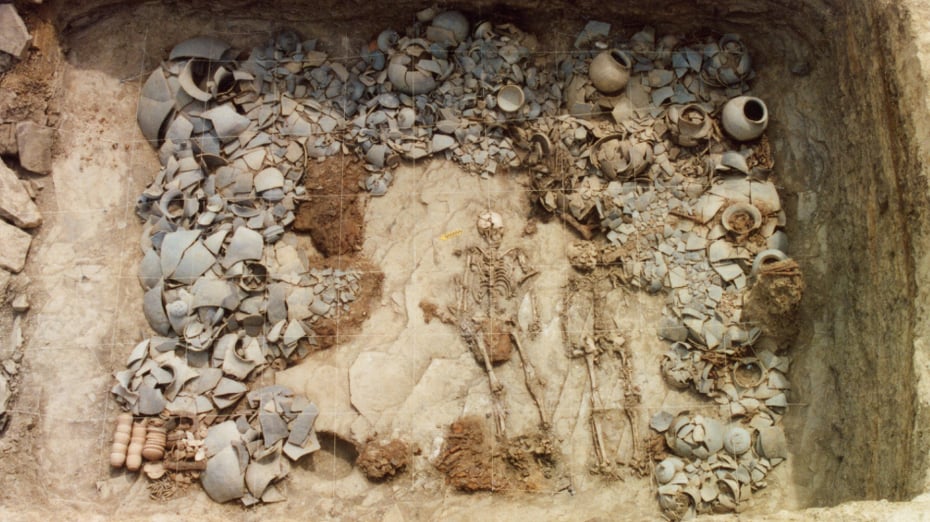
In the hills of Gyeongsan, in southeastern South Korea, a cemetery called the Imdang-Joyeong burial complex has sat quietly for roughly 1,500 years. Its tombs date to the fourth through sixth centuries A.D., during the Three Kingdoms period — one of the most formative eras in Korean history. Archaeologists have long known the site was significant. But it took modern genomic technology to reveal just how much information was encoded in the bones buried there. A new study published in April 2026 in the journal Science Advances analyzed the DNA of 78 skeletons from the complex, and the findings have reshaped what researchers understand about the Silla kingdom and the people who lived — and died — within it.
How Researchers Read 1,500-Year-Old Genetics
Extracting usable genetic data from ancient skeletons is technically demanding. Bone degrades over centuries, and DNA fragments into smaller and smaller pieces. The international research team behind this study had to work with genome-wide data — broad surveys of genetic markers across the entire genome — rather than single-gene tests. This approach allowed them to calculate precise degrees of biological relatedness between individuals buried at the site. They identified 11 pairs of first-degree relatives, such as parents and children or full siblings, and 23 pairs of second-degree relatives, such as grandparents and grandchildren or aunts and nieces. These numbers are far higher than chance would predict for an unrelated group of people, which immediately suggested the burials were organized around family connections.
The Silla Kingdom and the Practice of Sunjang
The Three Kingdoms period in Korea involved three competing states — Goguryeo, Baekje, and Silla — each with distinct political and cultural systems. Silla, based in the southeastern peninsula, eventually unified the Korean Peninsula under a single dynasty in 668 A.D. Historical records from Silla describe a practice called sunjang: a form of ritualized killing in which servants, called retainers, were killed and buried alongside powerful elites when those elites died. The idea was that the living would serve the dead in the afterlife. Written sources had described this custom, but physical evidence confirming it — and especially genetic evidence documenting who those retainers actually were and how they related to each other — had never been assembled before this study.
The Kinship Network Hidden in the Tombs
Using the DNA data, researchers reconstructed 13 separate family trees from individuals buried across the Imdang-Joyeong complex. The trees spanned two burial sites and covered more than a century of interments. What emerged was a dense web of overlapping relationships — not a random collection of community members, but a tightly connected network of kin. This network also displayed an unusual structural feature: it was organized primarily around maternal lineages, tracing descent and connection through women and their descendants. That stood in contrast to the male-focused kinship systems that dominated ancient Korea and ancient Europe during the same era. Why Silla favored maternal lineage tracking remains an open question, but the genetic evidence makes the pattern difficult to dispute.