HISTORYWhat Ancient Korean DNA Reveals About Society7 min read
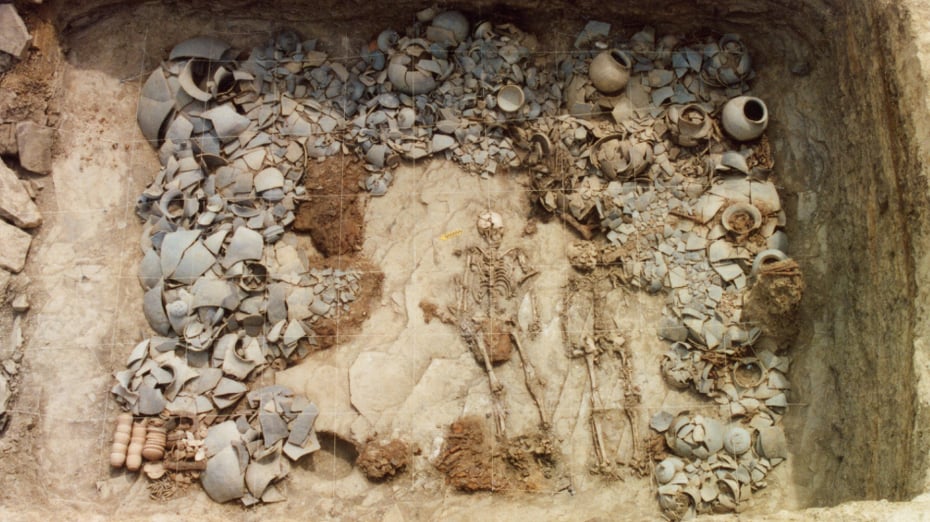
The Silla Kingdom and the Practice of Sunjang
The Three Kingdoms period in Korea involved three competing states — Goguryeo, Baekje, and Silla — each with distinct political and cultural systems. Silla, based in the southeastern peninsula, eventually unified the Korean Peninsula under a single dynasty in 668 A.D. Historical records from Silla describe a practice called sunjang: a form of ritualized killing in which servants, called retainers, were killed and buried alongside powerful elites when those elites died. The idea was that the living would serve the dead in the afterlife. Written sources had described this custom, but physical evidence confirming it — and especially genetic evidence documenting who those retainers actually were and how they related to each other — had never been assembled before this study.
The Kinship Network Hidden in the Tombs
Using the DNA data, researchers reconstructed 13 separate family trees from individuals buried across the Imdang-Joyeong complex. The trees spanned two burial sites and covered more than a century of interments. What emerged was a dense web of overlapping relationships — not a random collection of community members, but a tightly connected network of kin. This network also displayed an unusual structural feature: it was organized primarily around maternal lineages, tracing descent and connection through women and their descendants. That stood in contrast to the male-focused kinship systems that dominated ancient Korea and ancient Europe during the same era. Why Silla favored maternal lineage tracking remains an open question, but the genetic evidence makes the pattern difficult to dispute.