SCIENCEWhat Scientists Got Wrong About Ancient Sea Life8 min read
The Skeptics Make a Fair Point
Not everyone in the field accepts the study’s conclusions. Casey Dunn, a professor of ecology and evolutionary biology at Yale University, expressed significant skepticism about the extrapolations being made. His core objection is anatomical: the body shapes of the creatures being linked are so different from one another that it is hard to see how the same tentacle structures could be evolutionarily related rather than independently evolved. This is a legitimate methodological debate. Similar-looking structures can arise in unrelated species through convergent evolution — nature solving the same problem in similar ways without shared ancestry. Dunn was clear that his skepticism is specific to the evolutionary conclusions, not the fossil itself. He described the Daihua and related animals as exciting regardless of how their relationships ultimately get resolved, and acknowledged that more fossils from sites like Qinjiang will sharpen the picture considerably.
Why the Cambrian Period Keeps Rewriting Biology
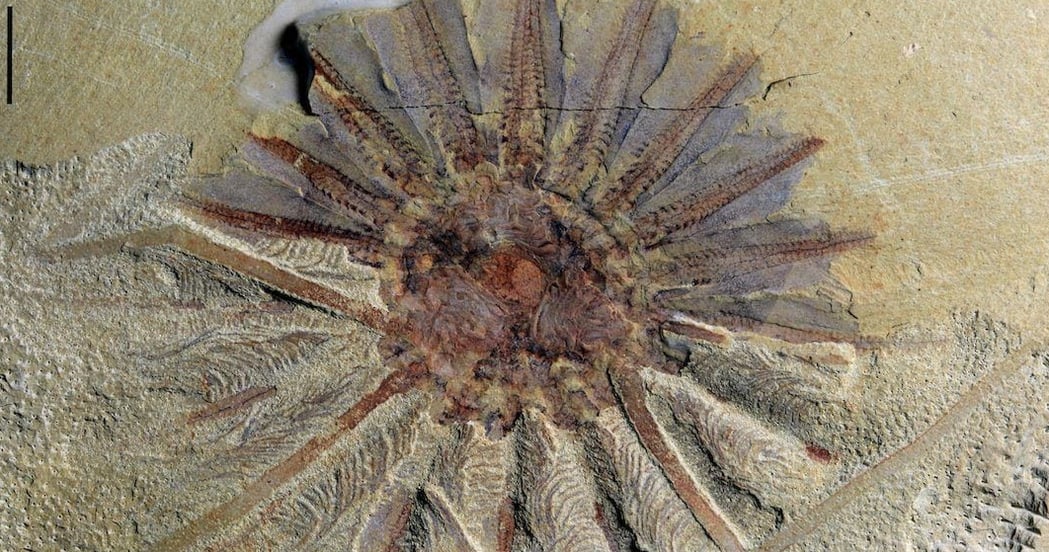
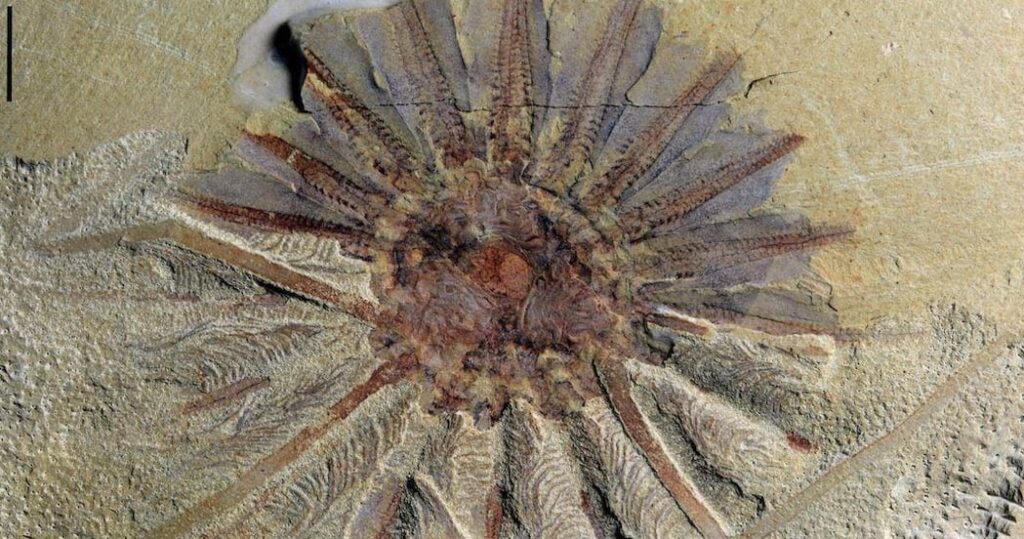
The Cambrian period, roughly 538 to 485 million years ago, saw an extraordinary diversification of animal life. Within a geologically short window, most of the major animal body plans appeared in the fossil record for the first time. Scientists have debated the causes and mechanisms of this explosion for well over a century. What sites like Qinjiang demonstrate is that there is still a great deal of diversity from that period that remains undocumented. When more than half the species found at a single site are new to science, it suggests the Cambrian record is far from complete. Each new site, each new deposit, each new excavation season has the potential to surface organisms that don’t fit existing categories — or that redefine them. The Daihua sanqiong is one such find. It came out of the rock intact, recognizable, and full of information that nobody had access to the day before it was found.
What a 518-Million-Year-Old Fossil Can Actually Tell Us
The broader significance of the Daihua discovery is methodological as much as biological. Vinther described fossil sites like Qinjiang as windows back to the past — rare moments where the conditions were right to preserve soft tissue in enough detail to do real comparative work. Most animals from the Cambrian left no trace at all. Their bodies dissolved, were eaten, or compressed beyond recognition. The fact that this creature fossilized the way it did, in the rock it did, in the region it did, is itself a low-probability outcome. What researchers can do with that preserved information — tracing evolutionary lineages, reclassifying known fossils, connecting living species to their ancient ancestors — depends entirely on having enough of these windows. Finding another one, Vinther noted, can change what science knows. The Daihua sanqiong is a clear example of exactly that.