SCIENCELook Up Tonight and You’ll Never See the Stars the Same Way Again4 min read

The Sky Your Ancestors Recognized
Step outside on a clear night, far enough from town that the glow fades, and you’re looking at something genuinely ancient. The same star patterns that Mesopotamian farmers tracked by season, that Greek sailors used to find their way home, that storytellers wove into myth — Orion standing in the winter sky, Taurus charging beside him, Ursa Major wheeling overhead. The shapes are the same.
Stars do move, barreling through space at thousands of miles per hour, but they’re so catastrophically far away that the motion barely registers across a human lifetime. Astronomers call this drift “proper motion.” On a scale of centuries, the patterns look frozen. The sky you see tonight is, for all practical purposes, the sky Aristotle saw.

Polaris Is Just the Current Tenant
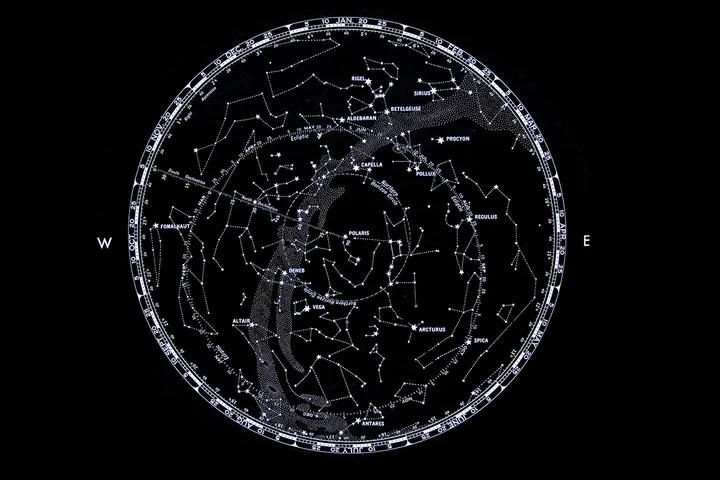
Polaris feels permanent — every star in the northern sky seems to circle around it through the night, and navigators trusted it for centuries. But it only has the job temporarily. Earth’s axis wobbles on a slow 26,000-year cycle called axial precession, and that wobble gradually points the pole at different stars over millennia.
From roughly 3,942 BCE to 1,793 BCE, a star called Thuban in the constellation Draco held the title. Ancient Egyptians built structures aligned to it. Around 12,000 CE, the brilliant star Vega in Lyra will take over. Then, in 20,346 CE, Thuban reclaims the crown. Polaris is a placeholder. The universe runs on longer schedules than we do.