SCIENCELook Up Tonight and You’ll Never See the Stars the Same Way Again4 min read
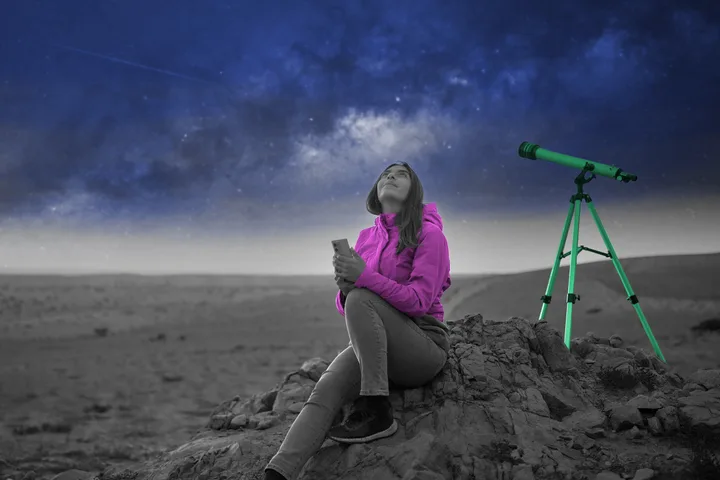
Three Thousand Stars, One Hundred Billion More
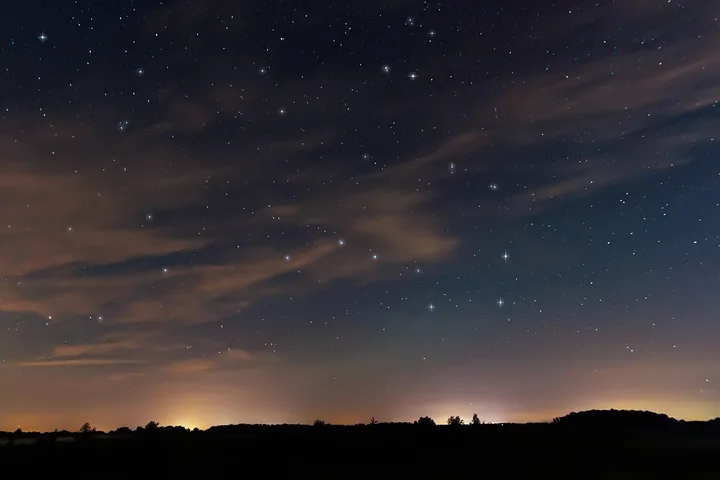
On a perfect night — no moon, no city glow, air sharp and cold — the human eye can resolve about 3,000 stars at once. That sounds like a lot until you do the math. Earth blocks the lower half of the sky, so the total number of stars visible to the naked eye across the entire planet is roughly 6,000. Our galaxy alone holds an estimated 100 billion. Beyond the Milky Way: billions more galaxies, each packed with billions of stars.
Those 3,000 stars are the nearest, the brightest — the ones close enough to push light to your eyes without assistance. Everything else isn’t invisible because it doesn’t exist. The universe is simply too vast for human eyes to register its actual scale.
Color Is the Star’s Biography
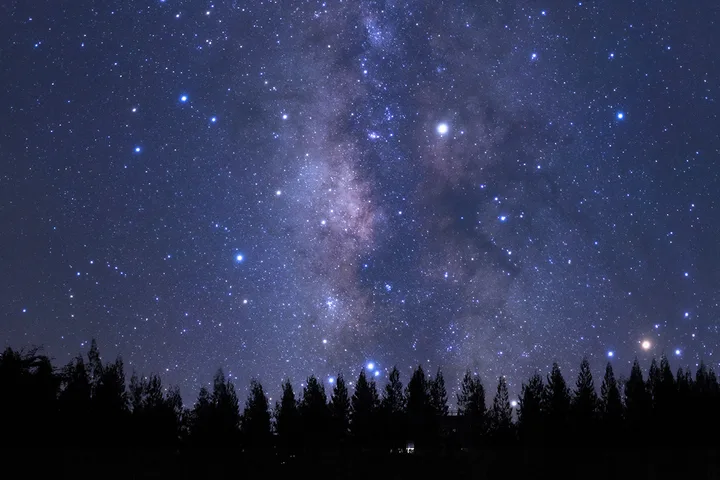
Blue stars burn hot and fast — surface temperatures above 25,000 Kelvin, lifespans measured in millions of years rather than billions. Red stars run cool and slow, some chugging along for tens of billions of years on far less fuel. Yellow-white stars like our sun sit squarely in the middle. Temperature, size, age, and fate: all of it encoded in one color, readable from your backyard.
You can see this in the winter sky with bare eyes. In Orion, Betelgeuse glows distinctly reddish-orange at the upper left shoulder. Rigel blazes bluish-white at the lower right foot. Two stars in the same constellation, worlds apart in physics. Historical records from cultures across the globe suggest Betelgeuse was described as yellower 2,000 years ago — meaning it has actually cooled and reddened as it aged, its slow transformation playing out across recorded human history.