
The Container Mistake That Keeps Hummingbirds Away
Why Containers Work Better Than You’d Expect
Most gardeners assume hummingbirds need a large, established garden to show up regularly. The reality is more practical: a few well-planted containers can draw hummingbirds just as reliably as a full flower bed, sometimes more so. Container gardening gives you precise control over what you plant, where you put it, and how quickly you can change things up. For anyone working with a small patio, a narrow balcony, or a yard that gets uneven sunlight, containers are not a compromise — they are a genuine strategy. Nectar-rich blooms clustered together in a pot create a concentrated food source that hummingbirds notice and return to. The key is choosing the right plants and setting them up correctly from the start.
The Soil Swap That Changes Everything
One of the most common container gardening errors has nothing to do with plant selection. It has to do with soil. Garden dirt looks like a reasonable shortcut, but it does not behave well inside a pot. It compacts over time, restricts drainage, and starves roots of the air circulation they need. A quality potting mix — one that includes ingredients like vermiculite, peat moss, compost, perlite, or a combination of these — behaves entirely differently. These materials stay loose, hold moisture without waterlogging, and support healthy root development throughout the growing season. For hummingbird-attracting plants like petunias, salvias, and calibrachoas, which need consistent moisture and good drainage simultaneously, the right potting mix is not optional. It directly affects how vigorously the plants bloom, and bloom volume is what brings hummingbirds back.
Petunias Do More Work Than They Get Credit For
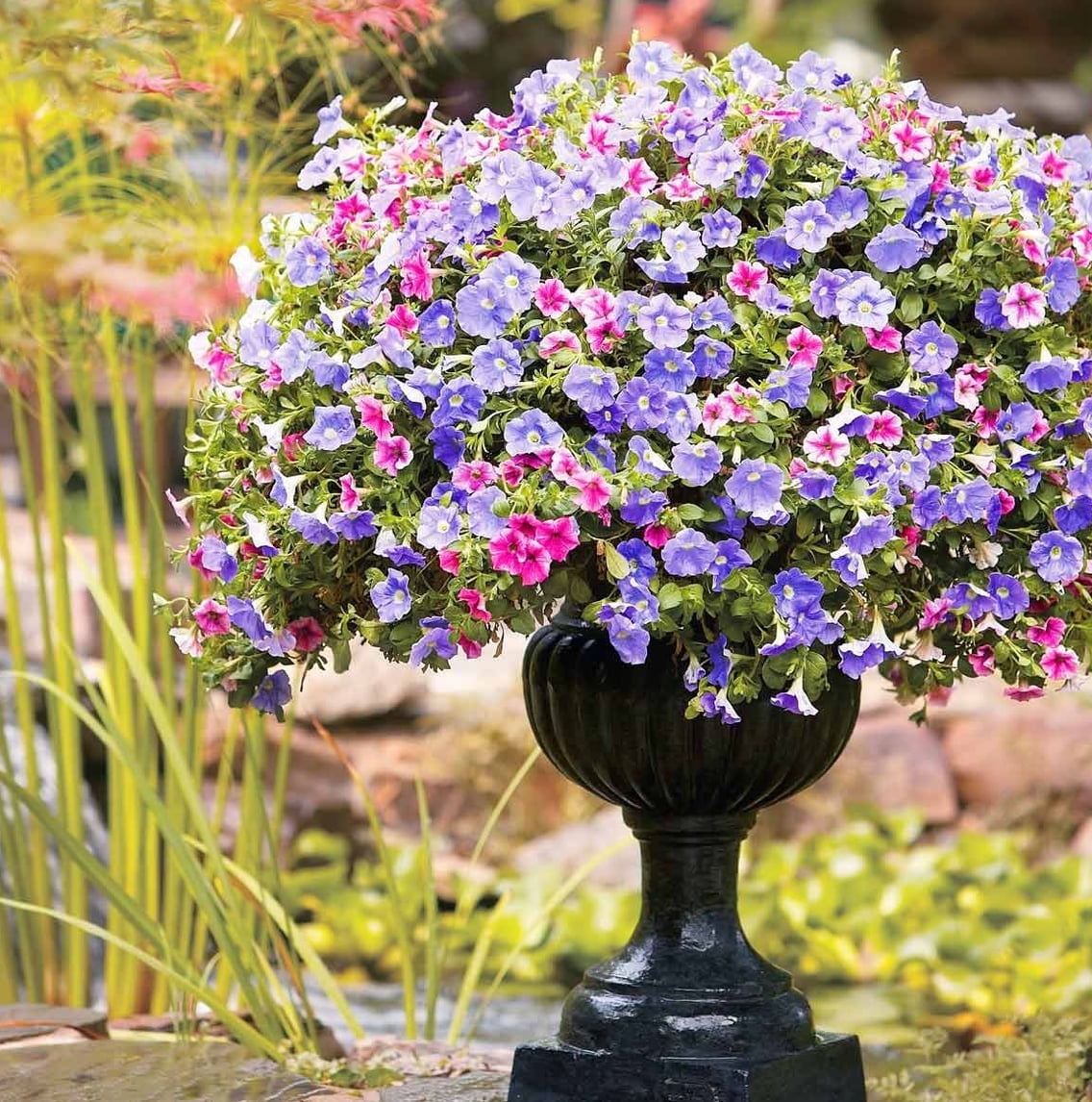
Petunias are easy to overlook because they are so common, but hummingbirds are drawn to them consistently. The tubular shape of many petunia varieties is well-suited to a hummingbird’s long bill and even longer tongue, making it easy for the bird to access nectar without wasted effort. Petunias also bloom heavily and over a long season, which matters more than people realize. A plant that produces a steady, abundant supply of flowers gives hummingbirds a reason to establish a regular feeding route through your yard. Wave and trailing petunia varieties are especially useful in container arrangements because they cascade over the edges, increasing the number of blooms visible from multiple angles. In a mixed container, they fill lower levels and keep the whole planting looking full and active well into fall.
Why Salvias Are the Real Anchor Plant
If petunias are the volume performers, salvias are the anchor. Their vertical, spike-like flower clusters stand above the rest of a container arrangement and act as a visual signal to passing hummingbirds. Red and orange salvia varieties are particularly effective because hummingbirds have a strong preference for those wavelengths — they are the colors most associated with nectar availability in the wild. Salvias also produce nectar in relatively high concentrations, giving hummingbirds a worthwhile payoff for each visit. Many salvia varieties are heat-tolerant and bloom reliably through hot summer months when other plants slow down. In a container, upright salvias provide structure and height, which helps the whole arrangement look intentional rather than scattered. They also pair well with trailing or mounding plants without competing for the same visual space.