
What Scientists Got Wrong About Ancient Sea Life
A Fossil Half a Billion Years in the Making
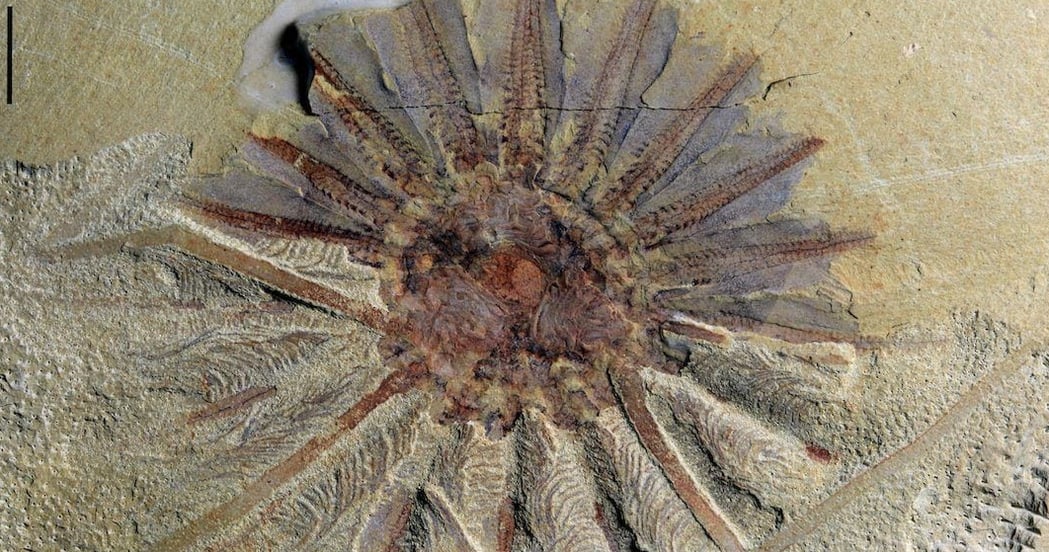
In the mudstone south of Kunming, in China’s Yunnan Province, researchers uncovered something that forced a serious rethink of early animal evolution. The fossil — now named Daihua sanqiong — is 518 million years old and belongs to a creature unlike anything alive today. It has 18 fine, feathery tentacles arranged in a ring around its mouth, and rows of large cilia running along each one. The preservation is extraordinary. Normally, soft-bodied organisms from this era are crushed, distorted, or lost entirely. This one came out nearly intact. The University of Bristol team that analyzed it, working alongside researchers from Yunnan University and London’s Natural History Museum, quickly recognized that they were looking at something with major implications — not just for this species, but for understanding where some of the earliest animals on Earth actually came from.
The Strange Creature Living in Every Ocean Right Now
To understand why Daihua sanqiong matters, it helps to know something about comb jellies. These translucent, soft-bodied animals drift through oceans worldwide, propelling themselves with rows of hair-like cilia that catch light and shimmer in iridescent colors. They are not true jellyfish — they belong to an entirely separate group called Ctenophora. What makes comb jellies scientifically significant is their position in the animal family tree. Many researchers believe they were among the very first animals to evolve on Earth, branching off from a common ancestor before almost anything else. That makes any fossil that can illuminate their origins enormously valuable. For decades, the evolutionary backstory of comb jellies was almost entirely a blank. Their soft bodies don’t fossilize well, and their closest ancient relatives had never been convincingly identified. The Daihua fossil changed that.
What the Fossil Actually Looks Like
The name Daihua sanqiong comes from the Dai ethnic group of Yunnan and the Mandarin word hua, meaning flower — a reference to the fossil’s striking, flower-like shape. The 18 tentacles radiate outward like petals, each one fine and feather-like, lined with rows of large cilia along the exterior. Lead researcher Jakob Vinther, a paleobiologist at the University of Bristol, described his first impression: when he looked at the fossil, he immediately noticed features he had only seen before in comb jellies. Specifically, there were repeated dark stains along each tentacle — the same kind of staining pattern seen when comb jelly combs fossilize. The cilia were large enough to be visible to the naked eye, which is unusual. Across the entire tree of life, such oversized ciliary structures are found in only one group of animals. That made the identification feel solid from the start.
Why Yunnan Province Keeps Producing Discoveries
The fossil was found by Professor Hou Xianguang of Yunnan University, a co-author on the study, in mudstone deposits that have become one of the most productive fossil sites on the planet. The Qinjiang biota, as scientists call this deposit, has been yielding remarkable specimens for over 30 years. What sets Qinjiang apart from other famous Cambrian fossil sites — including Canada’s Burgess Shale and the nearby Chengjiang biota — is the sheer number of species that are entirely new to science. University of Lausanne paleontologist Allison Daley noted that more than 50 percent of the animal and algae taxa found at this site had never been described before. The site also preserves soft tissue with unusual fidelity. According to Daley, the Daihua fossil is of truly exceptional quality because it shows the animal’s anatomy without the distortions that usually accompany fossilization over hundreds of millions of years.