SCIENCEWhat Scientists Got Wrong About Ancient Sea Life8 min read
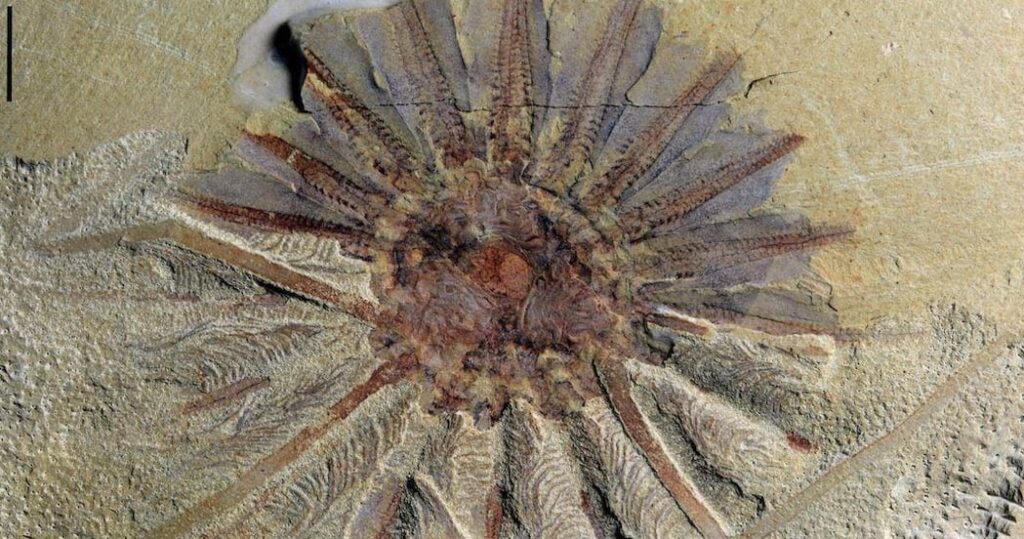
What the Fossil Actually Looks Like
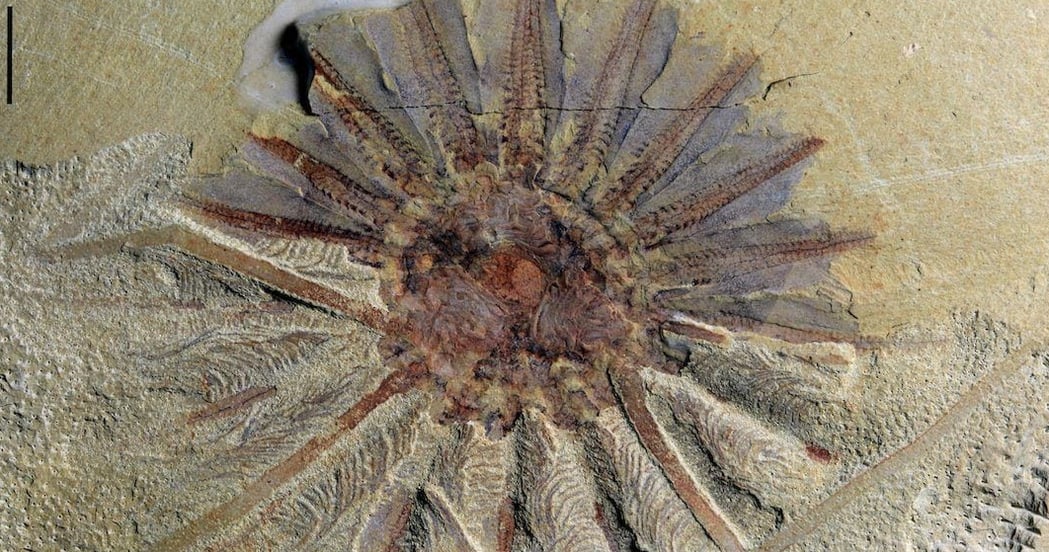
The name Daihua sanqiong comes from the Dai ethnic group of Yunnan and the Mandarin word hua, meaning flower — a reference to the fossil’s striking, flower-like shape. The 18 tentacles radiate outward like petals, each one fine and feather-like, lined with rows of large cilia along the exterior. Lead researcher Jakob Vinther, a paleobiologist at the University of Bristol, described his first impression: when he looked at the fossil, he immediately noticed features he had only seen before in comb jellies. Specifically, there were repeated dark stains along each tentacle — the same kind of staining pattern seen when comb jelly combs fossilize. The cilia were large enough to be visible to the naked eye, which is unusual. Across the entire tree of life, such oversized ciliary structures are found in only one group of animals. That made the identification feel solid from the start.
Why Yunnan Province Keeps Producing Discoveries
The fossil was found by Professor Hou Xianguang of Yunnan University, a co-author on the study, in mudstone deposits that have become one of the most productive fossil sites on the planet. The Qinjiang biota, as scientists call this deposit, has been yielding remarkable specimens for over 30 years. What sets Qinjiang apart from other famous Cambrian fossil sites — including Canada’s Burgess Shale and the nearby Chengjiang biota — is the sheer number of species that are entirely new to science. University of Lausanne paleontologist Allison Daley noted that more than 50 percent of the animal and algae taxa found at this site had never been described before. The site also preserves soft tissue with unusual fidelity. According to Daley, the Daihua fossil is of truly exceptional quality because it shows the animal’s anatomy without the distortions that usually accompany fossilization over hundreds of millions of years.