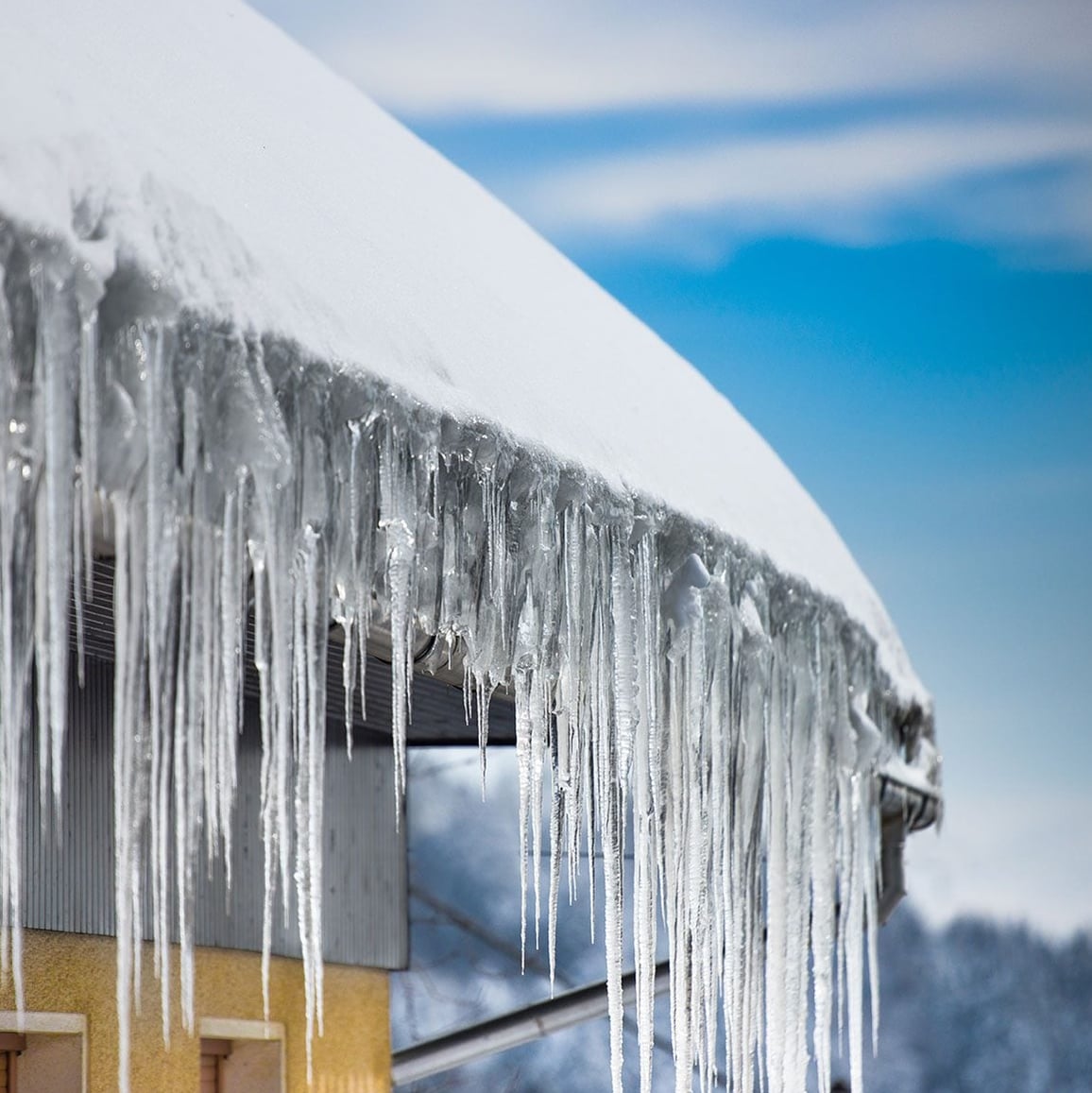
HOMEThe Ice Dam Mistake Almost Everyone Makes7 min read
Soffit Vents and Ridge Vents Explained
The most effective ventilation system pairs soffit vents at the eaves with a ridge vent at the peak of the roof. Soffit vents, installed in the underside of the roof overhang, bring in cold air at the lowest point. A continuous ridge vent running the full length of the roof peak allows warm air to escape at the highest point. For existing soffits, a practical rule is to install an 8-by-16-inch vent in every other rafter bay. If rebuilding a soffit from scratch, a continuous 2.5-inch-wide strip vent looks cleaner and performs well. On roofs with short ridges — pyramid shapes, for example — square roof vents near the peak can supplement the ridge vent, with total area roughly matching the soffit vent area below.
What a Cold Roof Looks Like After a Snowfall
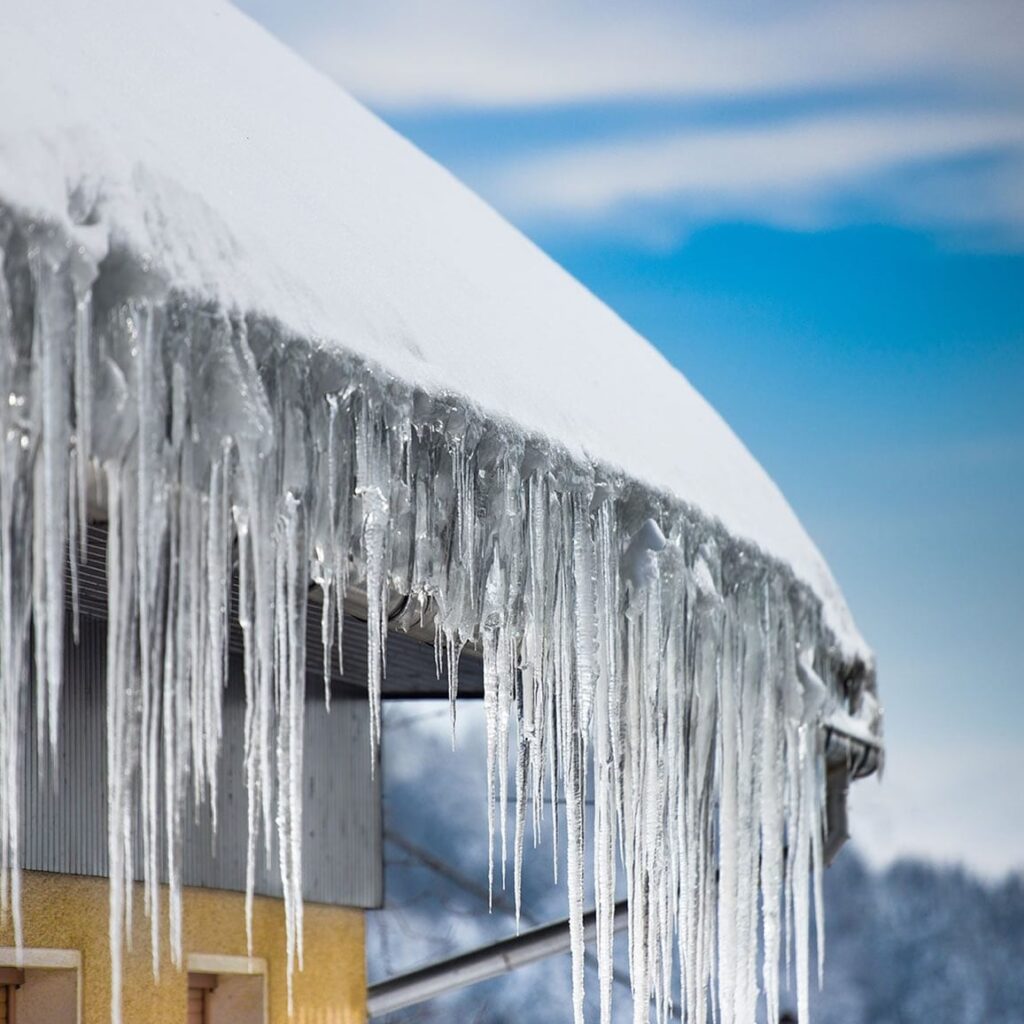
One reliable way to assess a roof’s thermal performance is to observe it after a snowfall. A roof that stays cold — because the attic beneath it is properly sealed, insulated, and ventilated — holds a thick, even blanket of snow across its entire surface. A roof losing heat from below tells a different story: patches of snow disappear over the warmer sections, and icicles often form along the eaves where meltwater refreezes. The pattern of snow retention across neighboring rooftops on a cold morning is a surprisingly accurate map of attic heat loss. Clear spots above the interior ceiling with snow retained over the eaves means heat is escaping unevenly — exactly the profile that produces ice dams.